Lucas de la Rubia
5 december 2020 11 january 2021
MADRID
Huyeron Capitanes
For nine months now, I've been walking to my studio. Every day, I cover the same ten kilometers of distance. Initially, that walk was just a way to get there, but as the months passed, it has become part of the work, the work itself. A ritual like that of the whirling dervishes, which traps sounds, smells, materials, and images with a pulsating rhythm. Step by step, as I cross another street and another sidewalk, marks are unveiled like those left behind by unaware inhabitants, animals, or children stepping on the still-damp cement. Caught-in-the-act gestures. Containers full of lives and emptied homes. A doorway around the corner. The neighborhood becomes a large warehouse full of pieces to compose, and notes to play. Everything is still and clear in the eye of the hurricane.
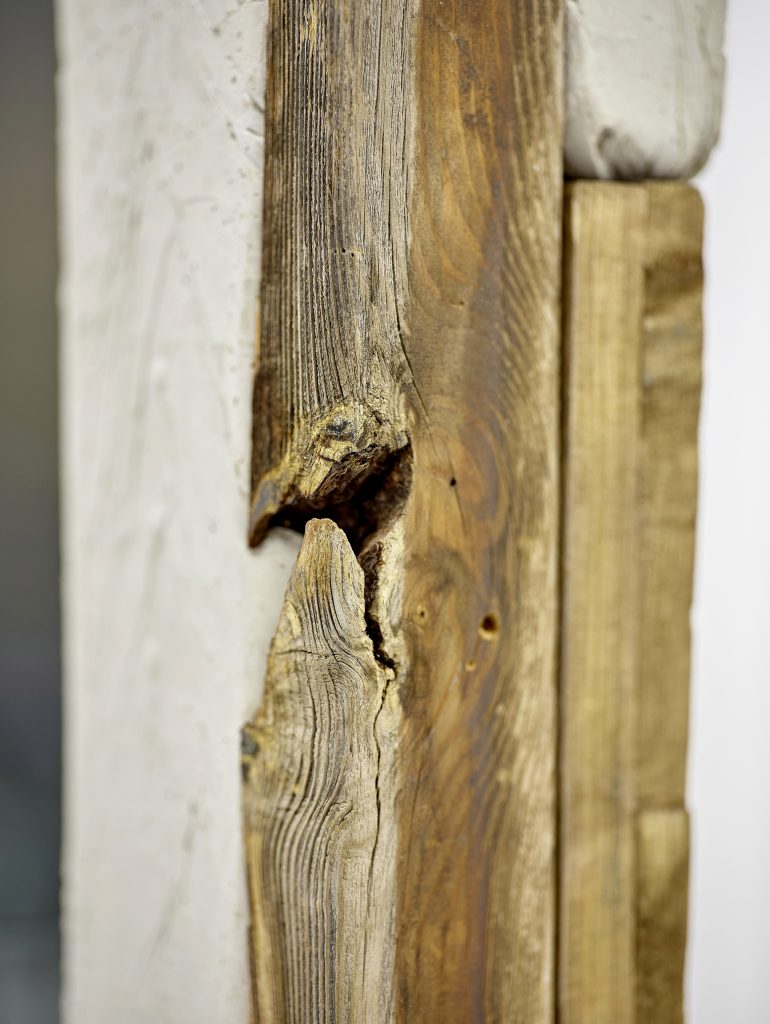
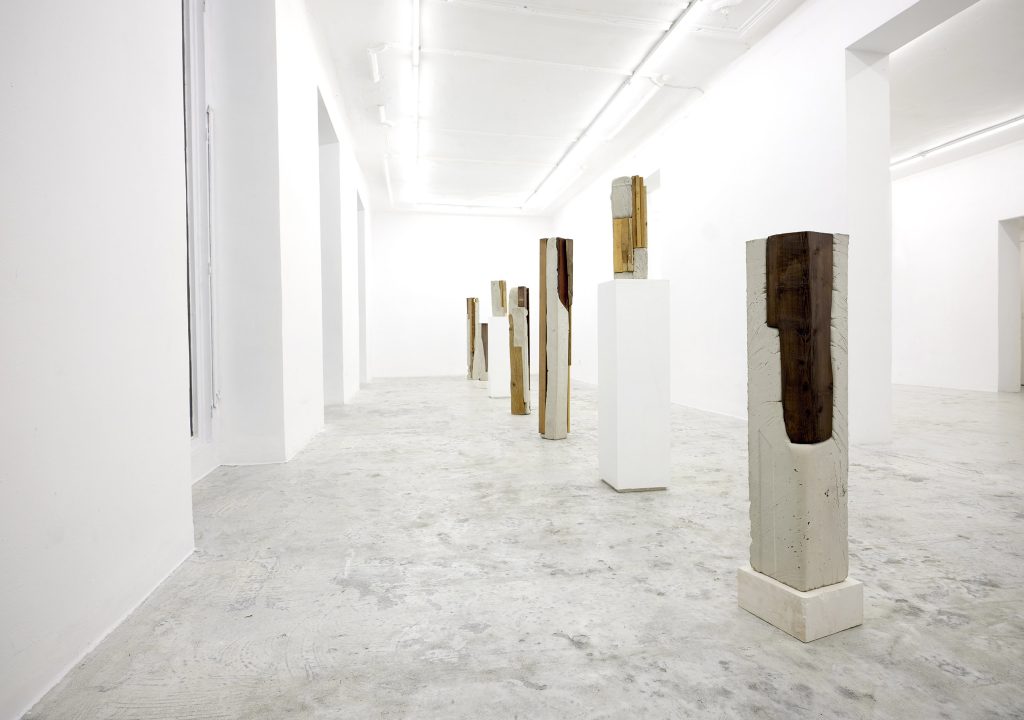
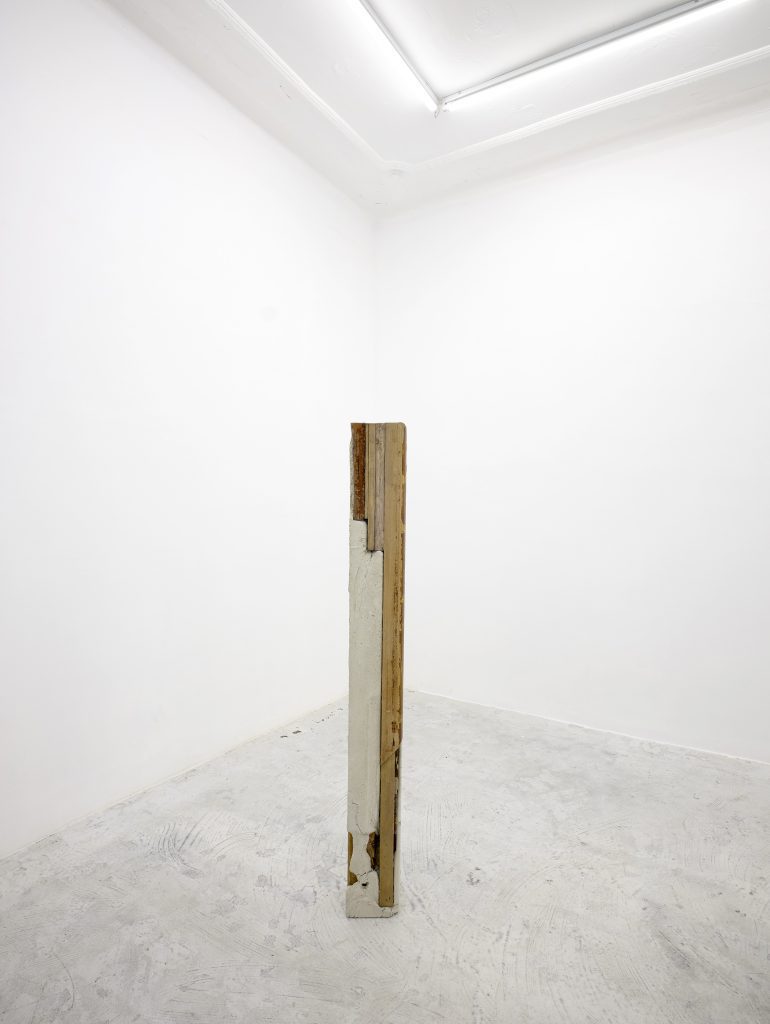
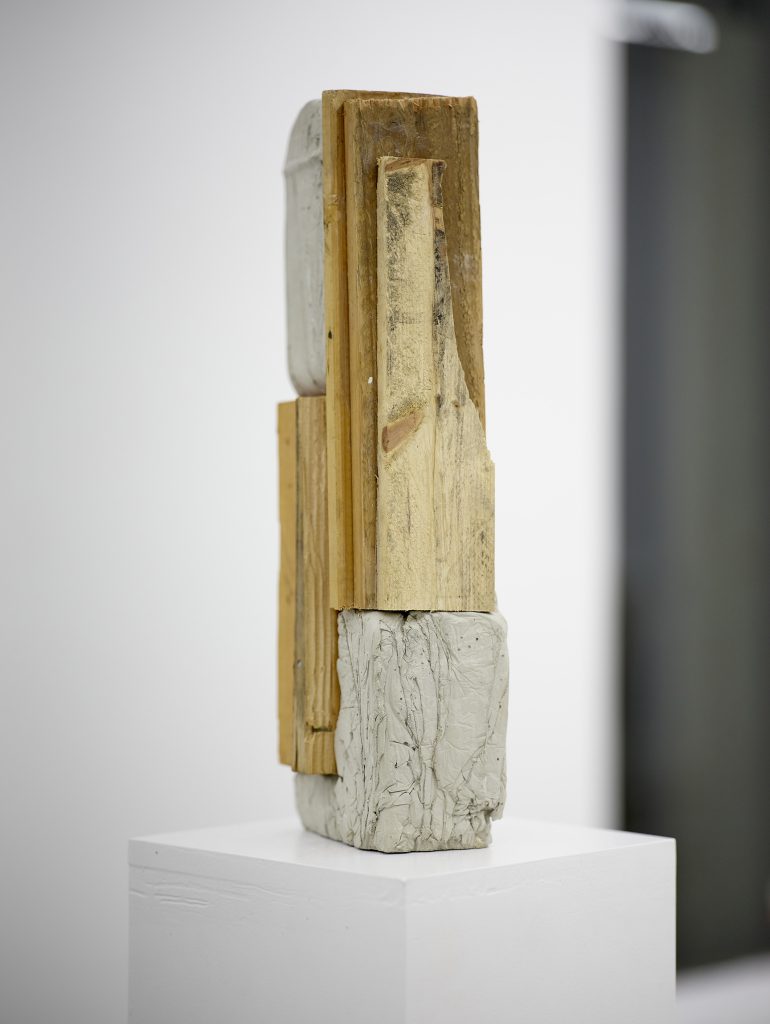
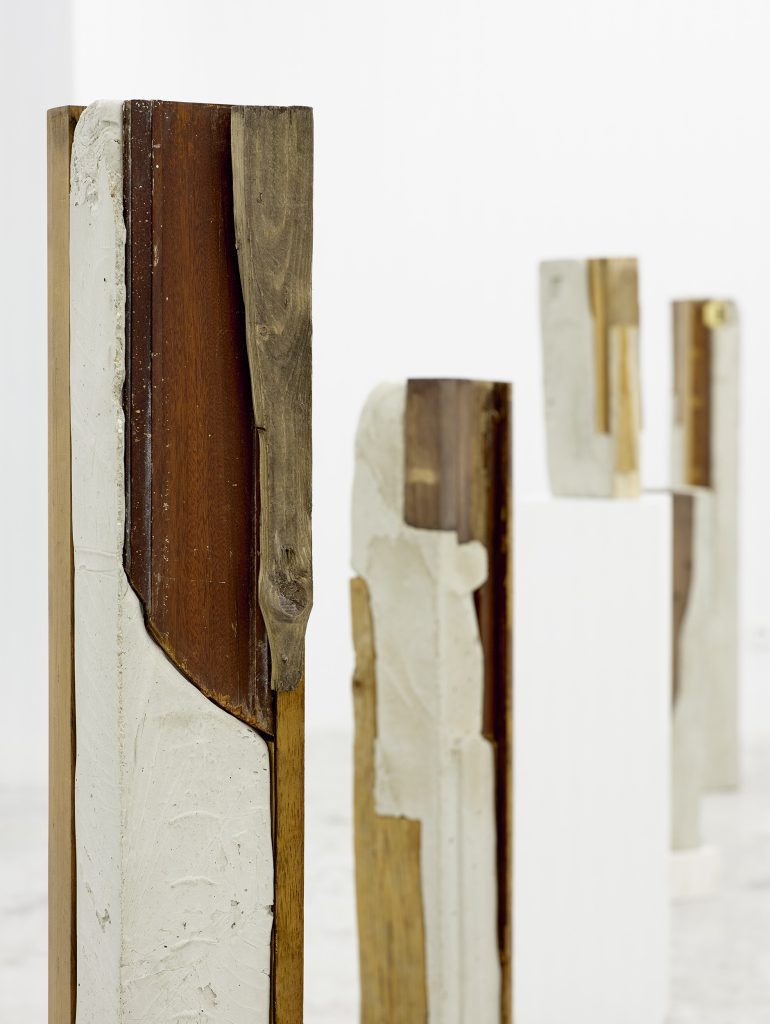
This exhibition is a turning point, an epilogue that culminates with this series of pieces, closing a journey undertaken over the past two years and opening another new one. In "Huyeron capitanes", all the plastic and conceptual concerns of previous works are present: the duality of the human being, the coexistence between the describable and the ineffable, the idea of a fossilized society, the symbol as an unavoidable gesture of society. These pieces, made of concrete and wood, formally delve into a paradox. A conflict between two elements that must coexist together. On one hand, there is what we can understand, what we quantify and classify. On the other hand, there is what escapes us, what we cannot understand. It is alongside this second element where the poetry of the fossil takes place.
And so, naturally, all the work has become imbued with the journeys to the studio. The vernacular has taken center stage, and the narrative and life of the elements that make up these pieces are fundamental. Windows, chamomile, asphalt, hands, and corridors.
José-Miguel Ullán, 'El Jornal' (1965)