Lara Ordóñez
30 January – 14 March 2026
MADRID
Darning the time
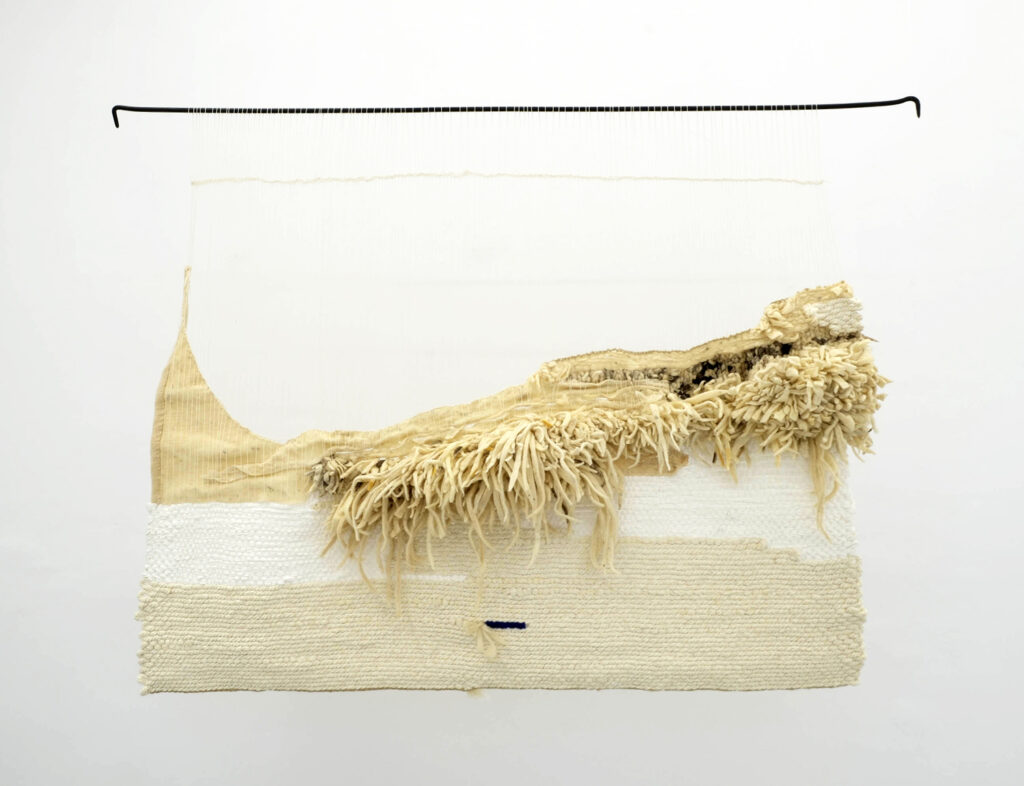
Weaving is storytelling. Lara Ordóñez (Castellón, 1995) writes her narratives with her fingers, using fibers, as characters emerge to tell a story that is partly hers and partly that of those no longer here to recount it. The textile materials she employs speak their own tale—scraps of color and texture that evoke the artist’s genealogy, but also resonate with anyone capable of reading and decoding their language.
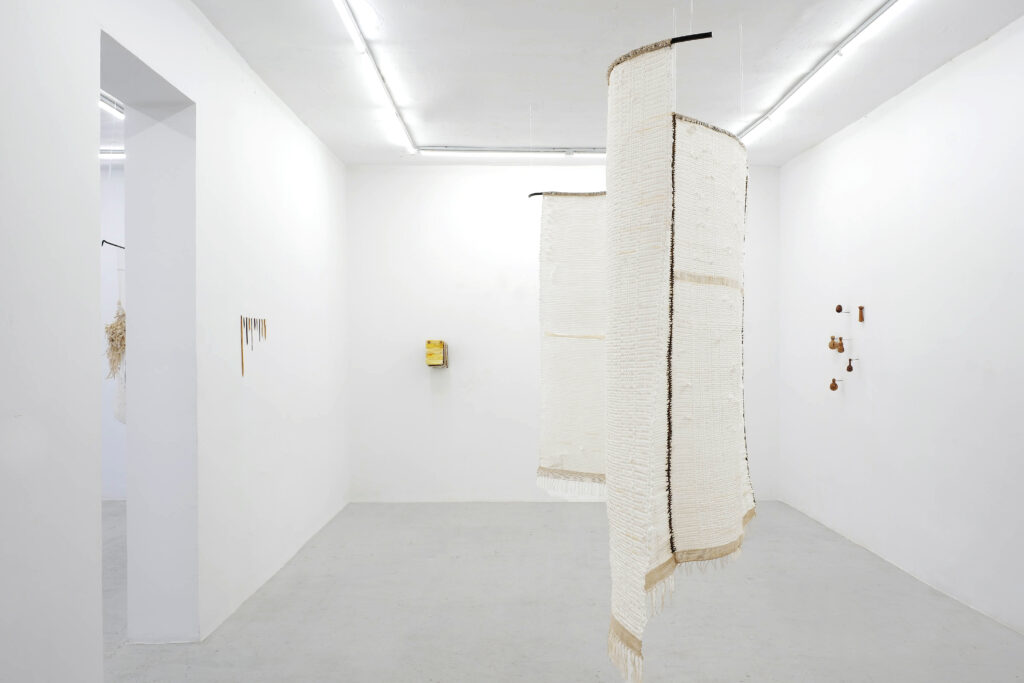
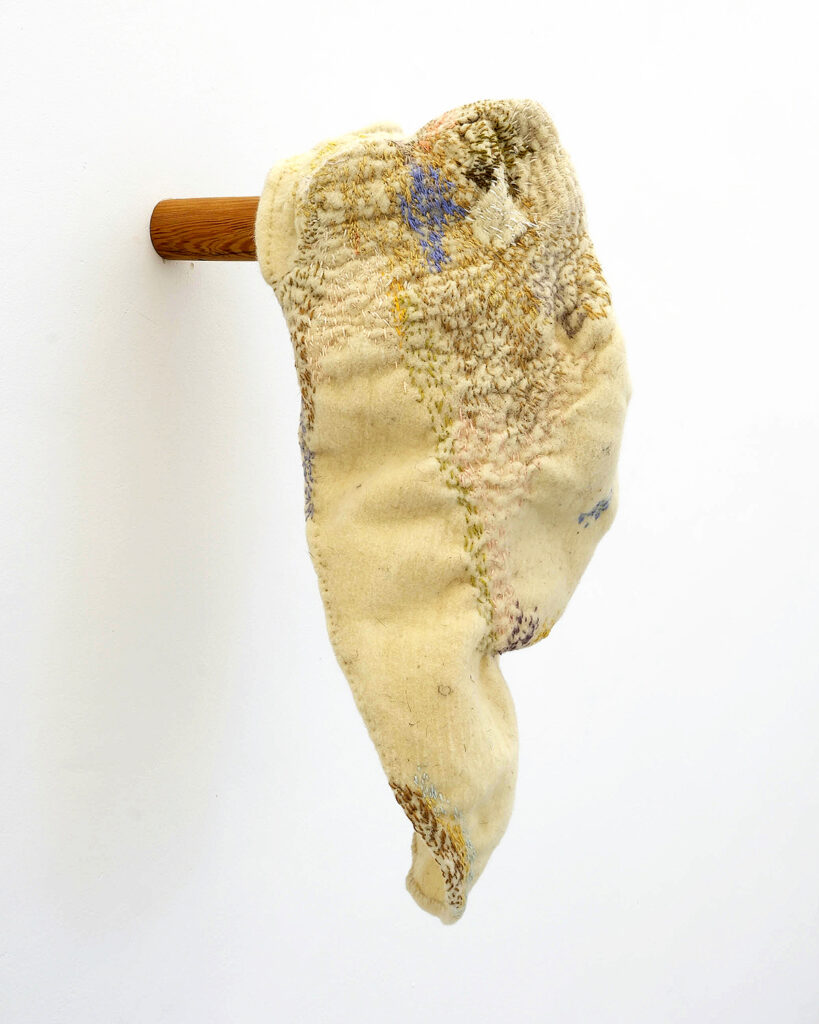
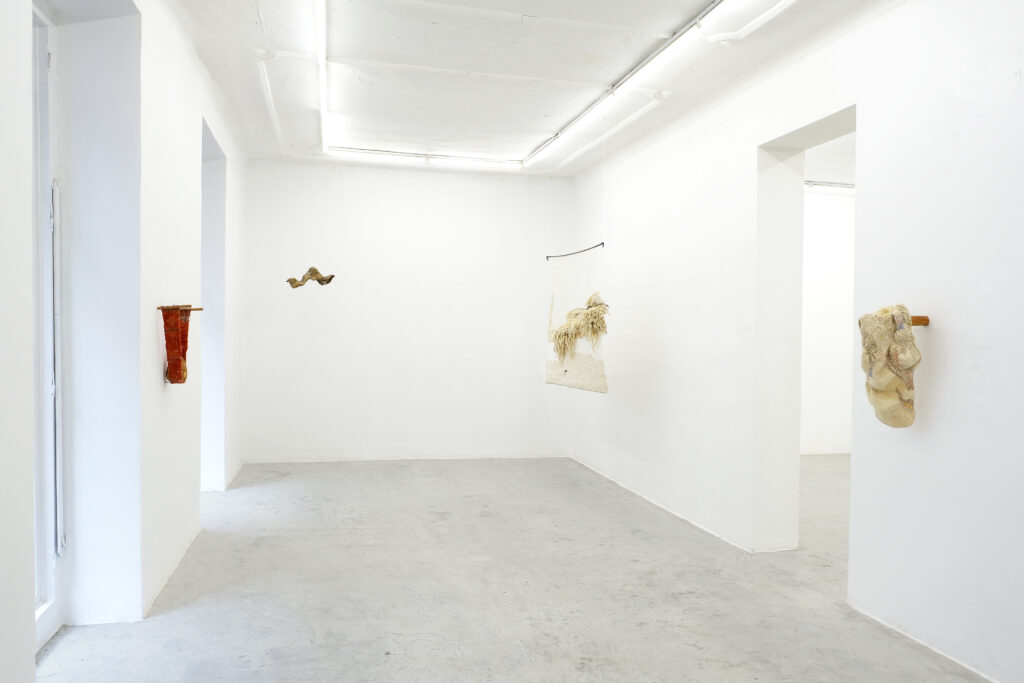
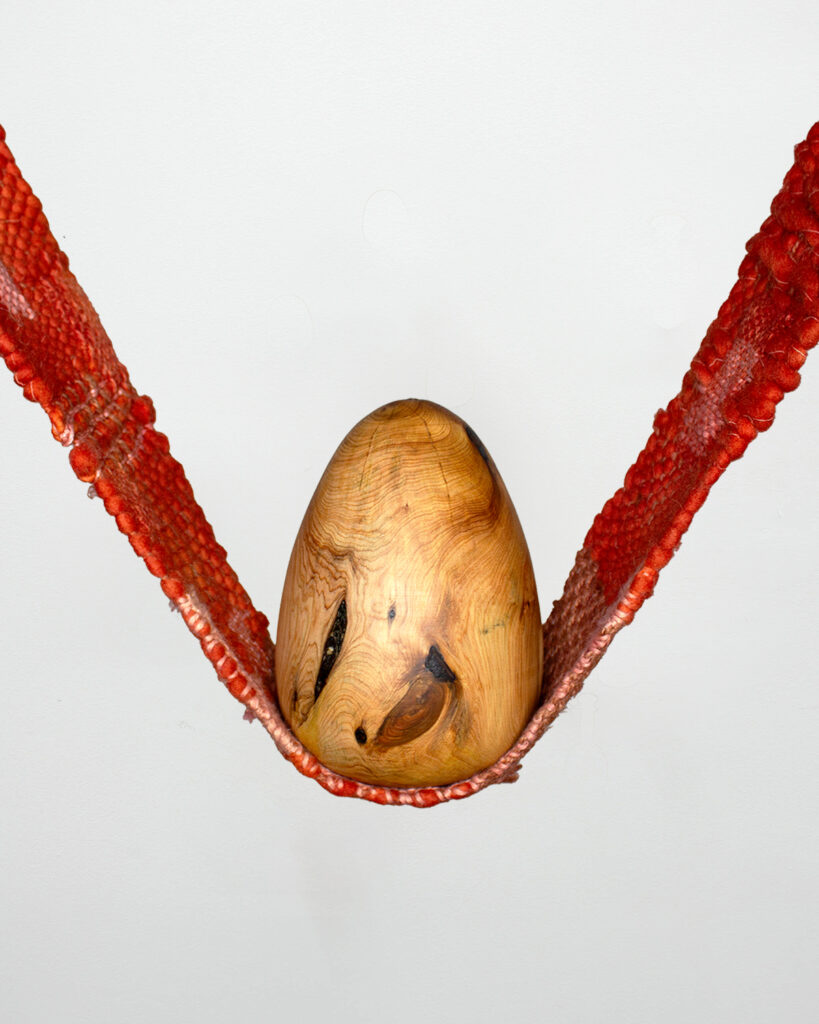
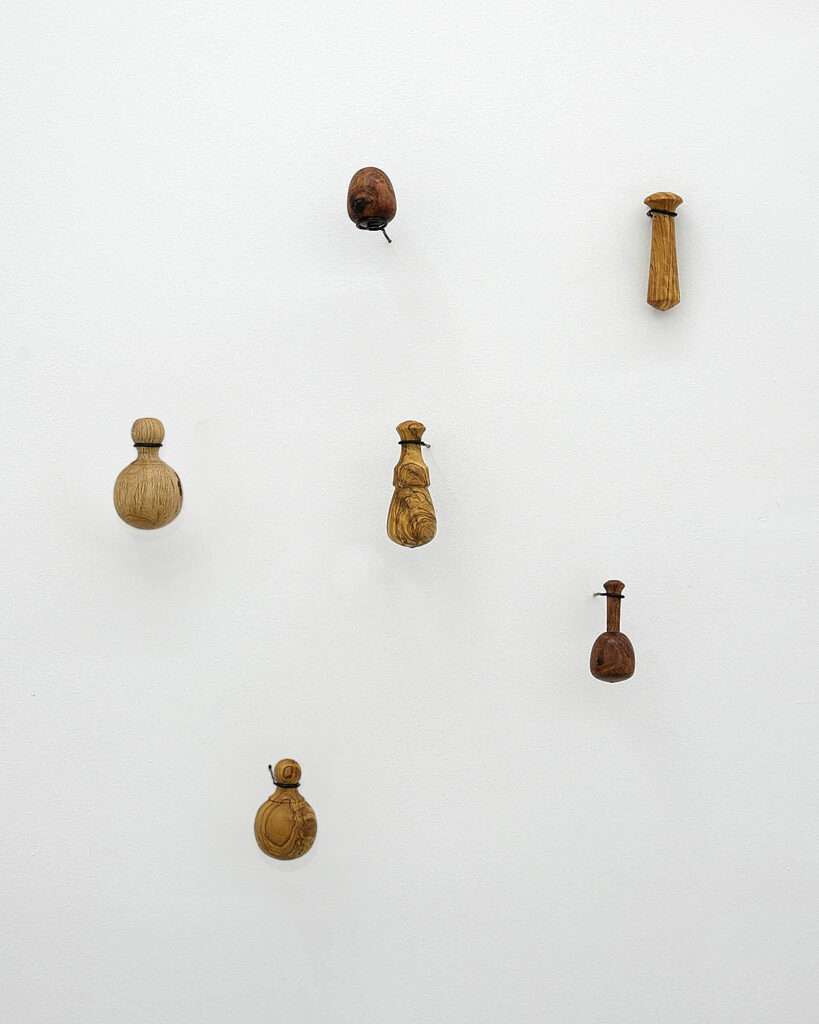
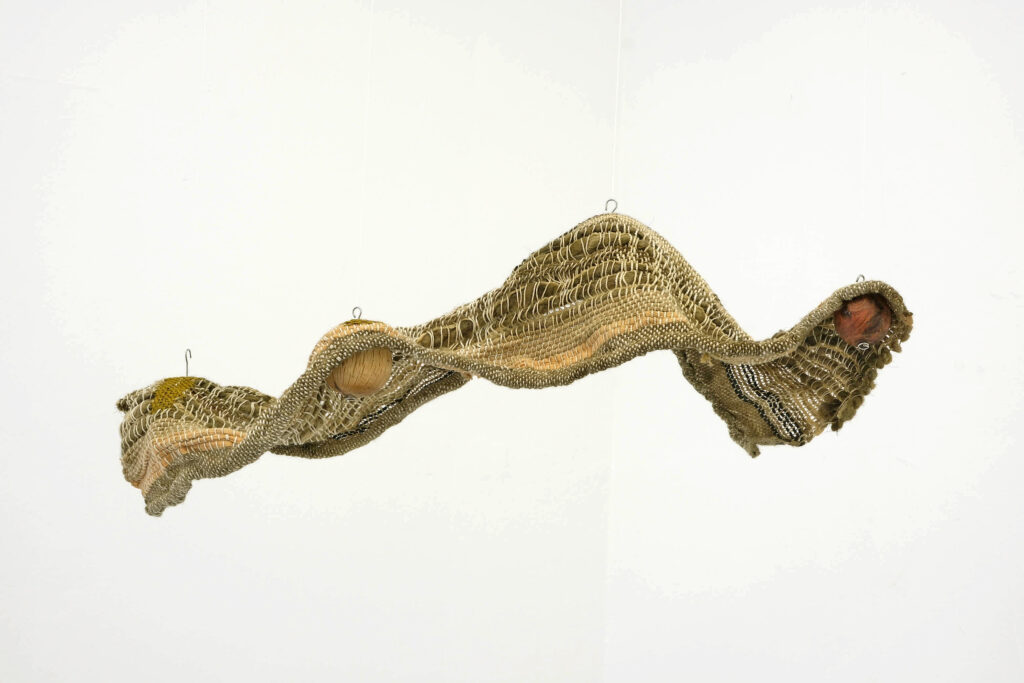
For this exhibition, Ordóñez focuses on mending and darning—traditional repair techniques that have nearly vanished in today’s fast-paced culture of consumption. She invites us to pause, to pay attention to the hand-stitched thread—those stitches that pull together and hold a larger fabric. Strategic support points, much like tools themselves, where small parts sustain the larger act of repairing. Olive, carob, and juniper woods—sourced from the trees surrounding her studio—allow her to re-write with thread across fabrics once woven by the hands of other women. To mend and to darn is to recover and reread thread-texts as though they were books, manuscripts, or scrolls. The needle becomes a writing tool, just like a pencil on paper.
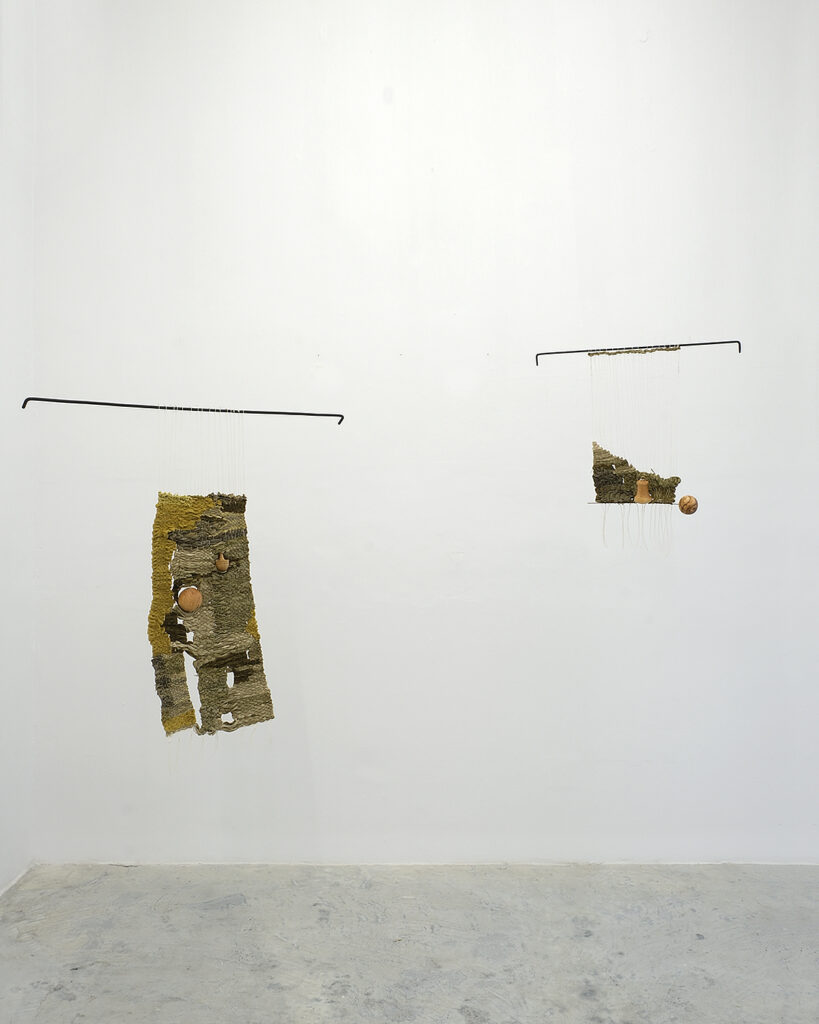
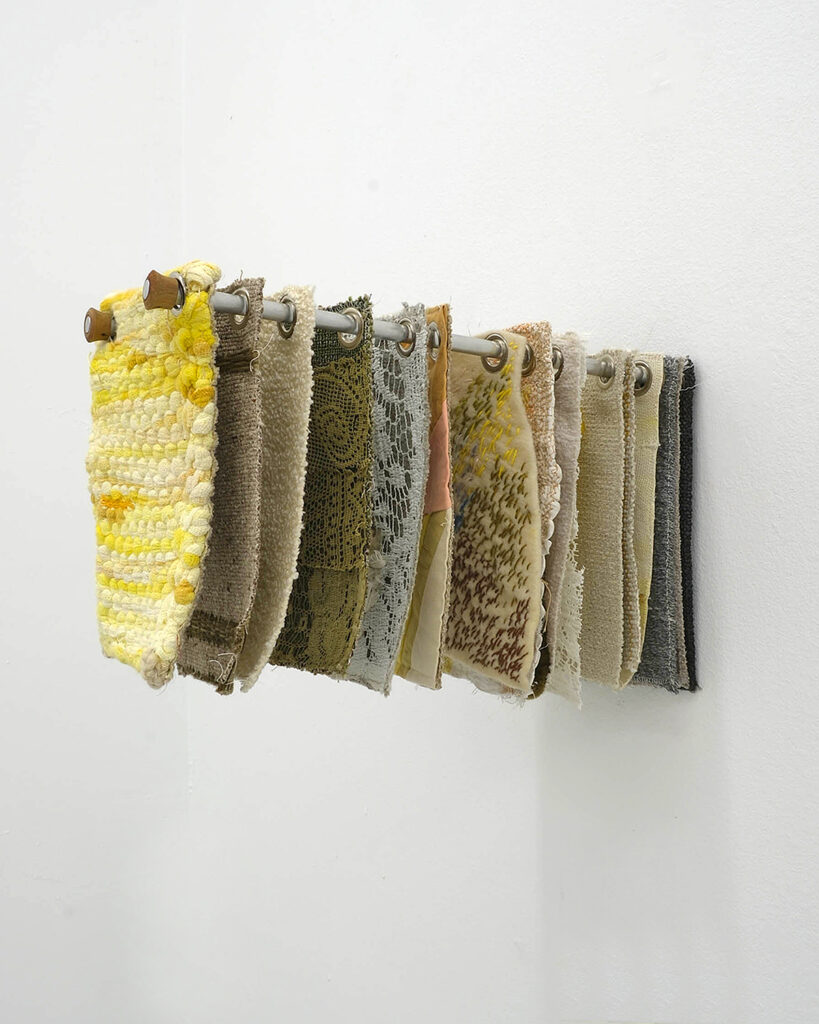
Layering adds strength to the discourse. Mending and darning are acts of resistance, memory, and a reclaiming of inherited knowledge—repurposing what already exists to create something new. This project prioritizes material experimentation, not only on the loom. It begins with the recovery of fabrics used as raw fiber, rather than thread, and continues through the reuse of existing cloths—each carrying their own past—whose threads have been reworked by the artist to weave the pieces on view. Manual dyeing plays a key role, reviving traditional techniques to create color and prepare the dye bath: a large pot with water, iron sulfate, and alum as mordants. The fabrics are then dyed by hand using pomegranate and onion skins—everyday, seasonal materials gathered from the artist’s surroundings. She has saved, dried, and transformed them directly from kitchen waste into fabric dye. Her practice begins even before entering the studio, rooted in this process of transformation.
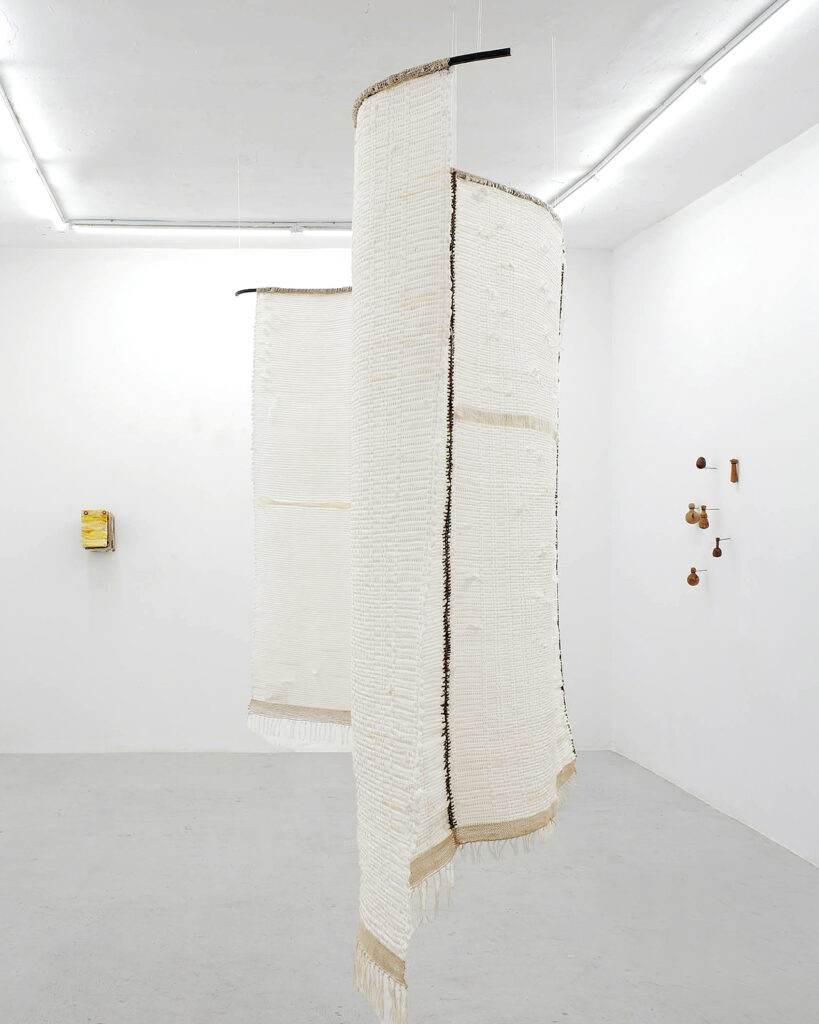
In parallel, Ordóñez has engaged the craft of weaving on both low-warp and high-warp looms, laying the base fabrics that serve as lines and text—writing materials for storytelling. She has also hand-turned the wood pieces after allowing them to dry, later integrating them into the textile discourse. Here, tools are not separate objects but integral parts of a process that exchanges between the soft, the flexible, and the hard. Wood—like fabric—accumulates time in layers, remaining alive within each piece.
This project calls for slowness, attentiveness, and observation. A necessary slowing down in order to read the language of fabric, to reclaim the memory embedded within its threads. It is a material exploration grounded in the search for existing matter to mend and darn. This is how Lara Ordóñez understands weaving—and, in turn, her own practice.