Federico González Sosa
Jul 1 - Aug 1, 2026
MADRID
Par Sympathie (III)
TEXT: CLEMENT CABALLERO
Architecture and Psychology
We inhabit spaces traversed by forces that we rarely perceive directly. Vibrations, resonances, memories, narratives, and presences continue to operate long after their source has faded away. Some remain inscribed in walls, others in objects, and still others in the bodies that move through them, as residues of past experience. These invisible fields of force emanate from autonomous and singular entities that enter into relation not through direct contact, but through vibration. In acoustics, this phenomenon is known as sympathetic resonance. More than a physical principle, it offers a way of thinking about the relationships that bind beings, objects, and places.
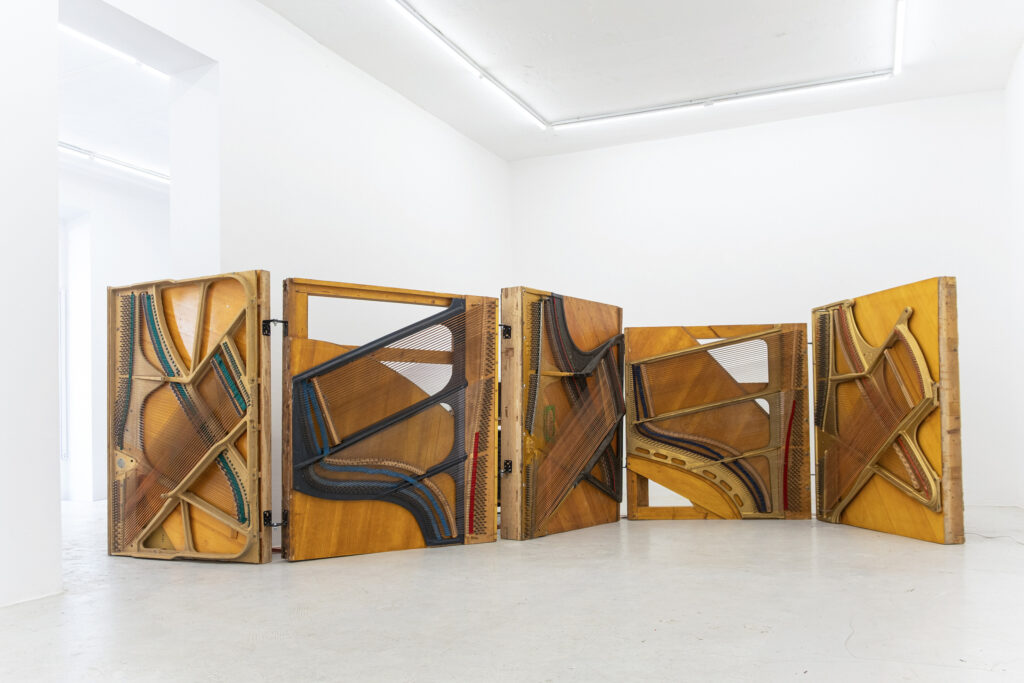
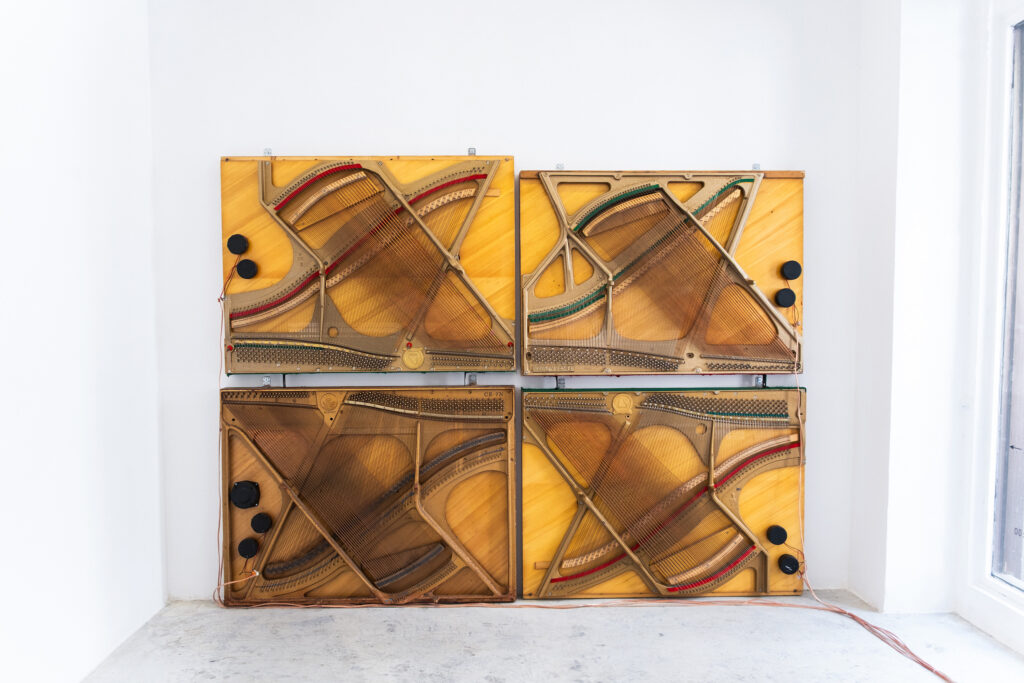
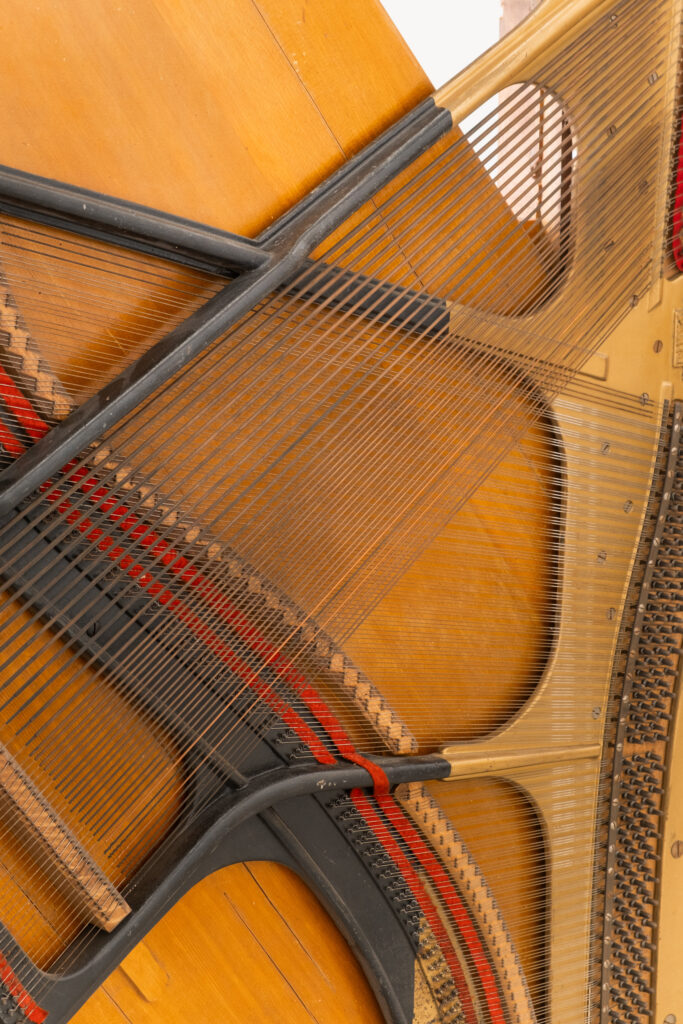
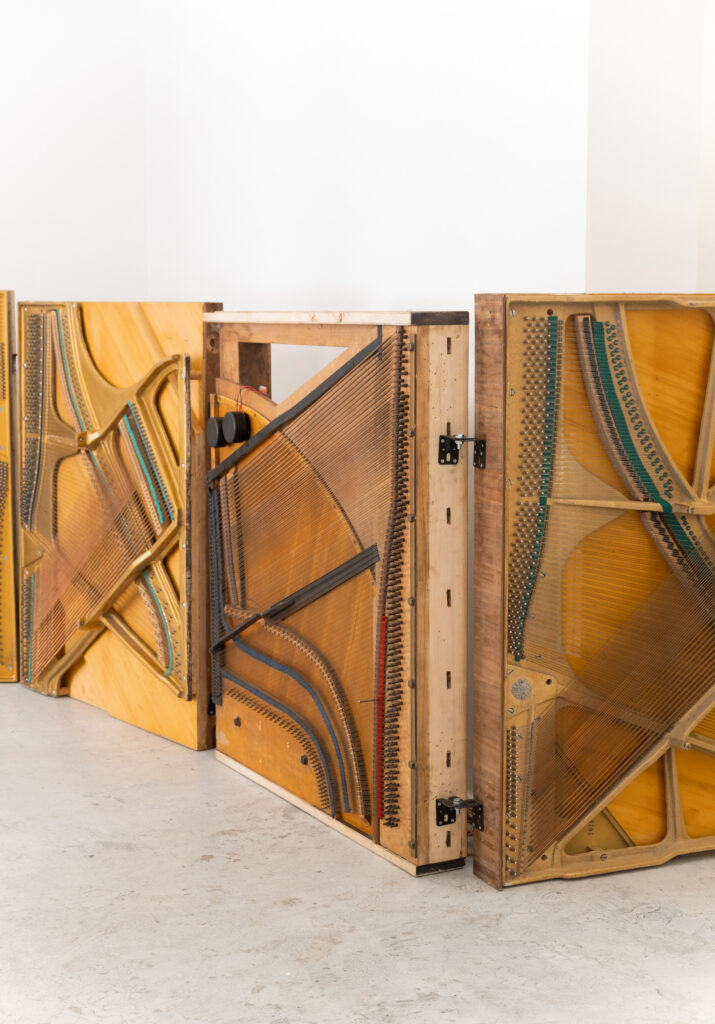
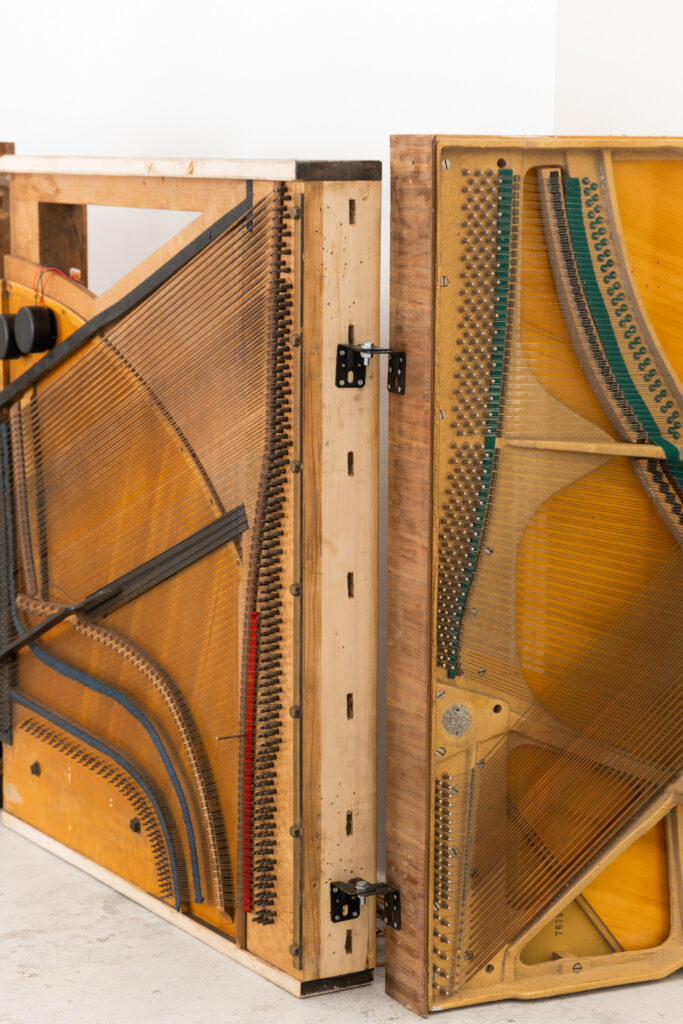
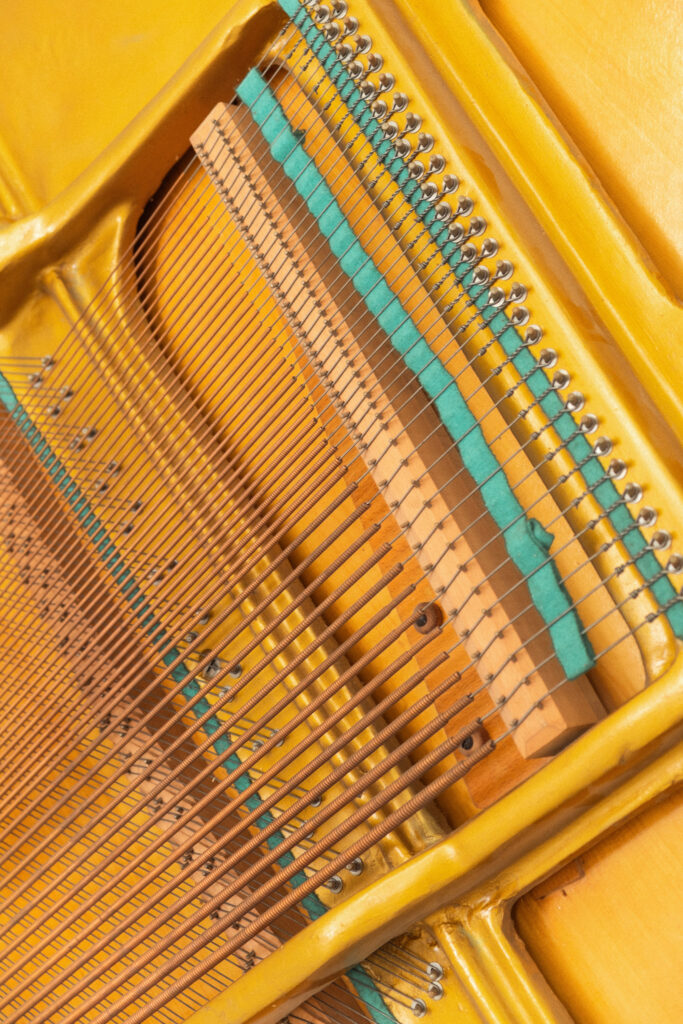
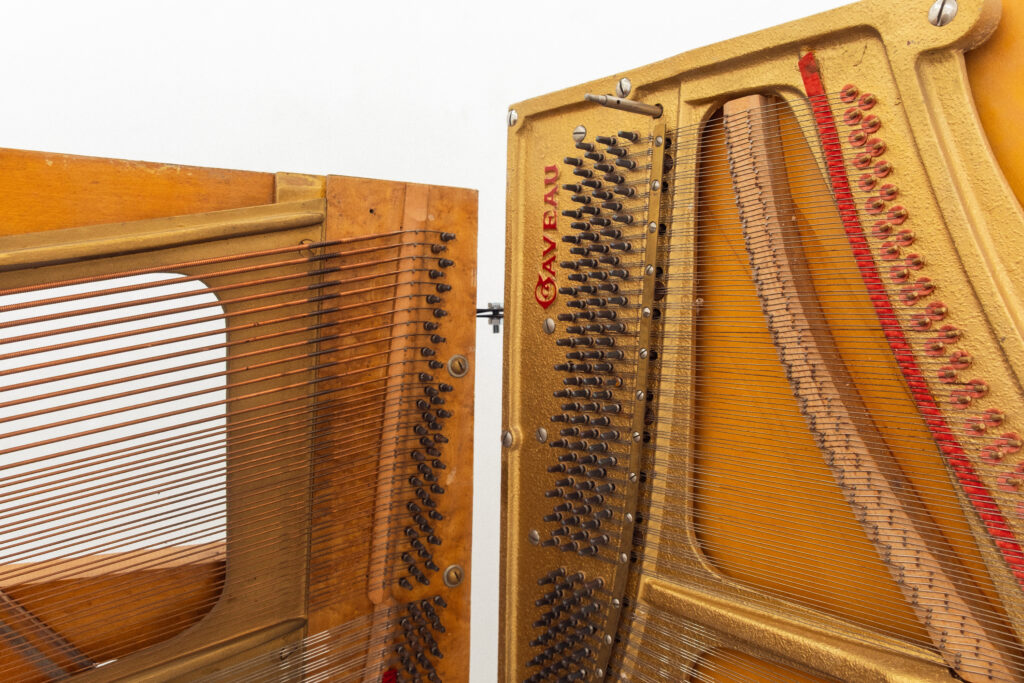
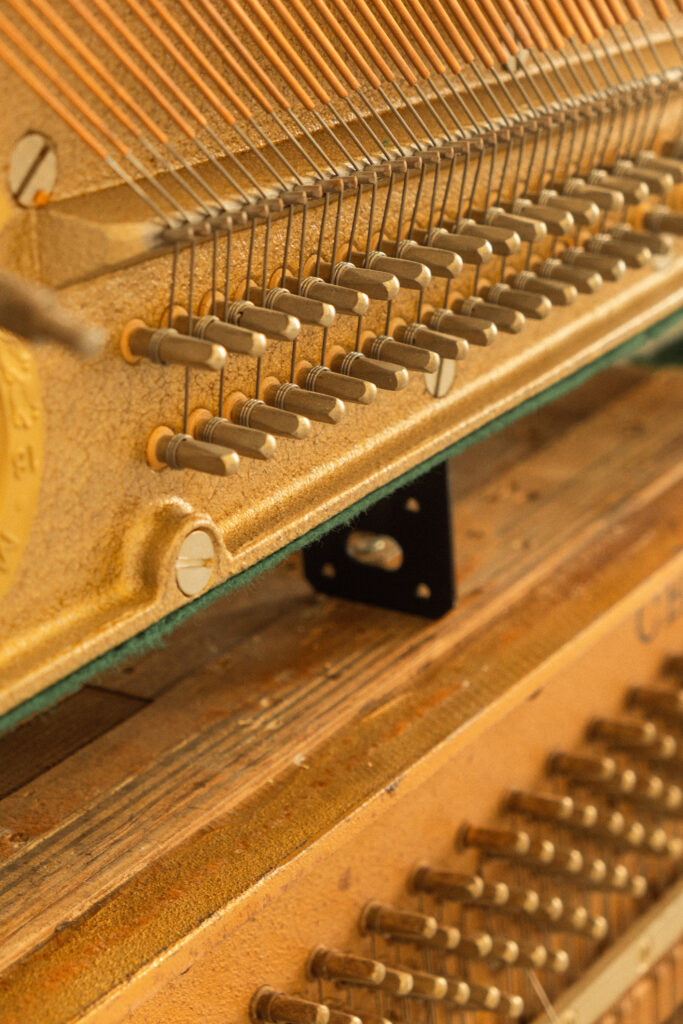
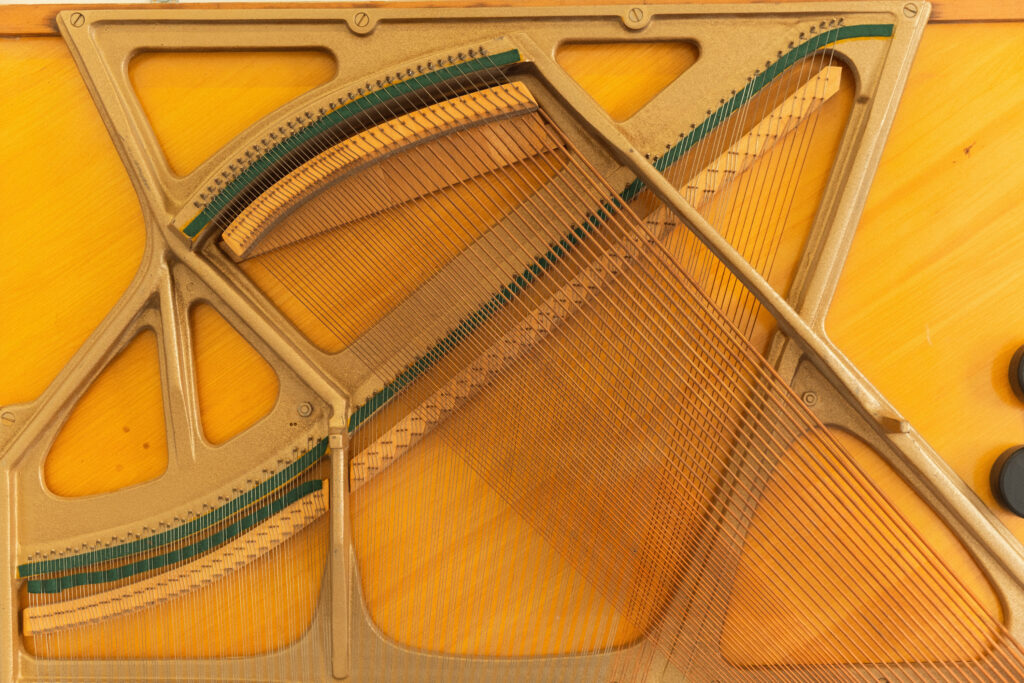
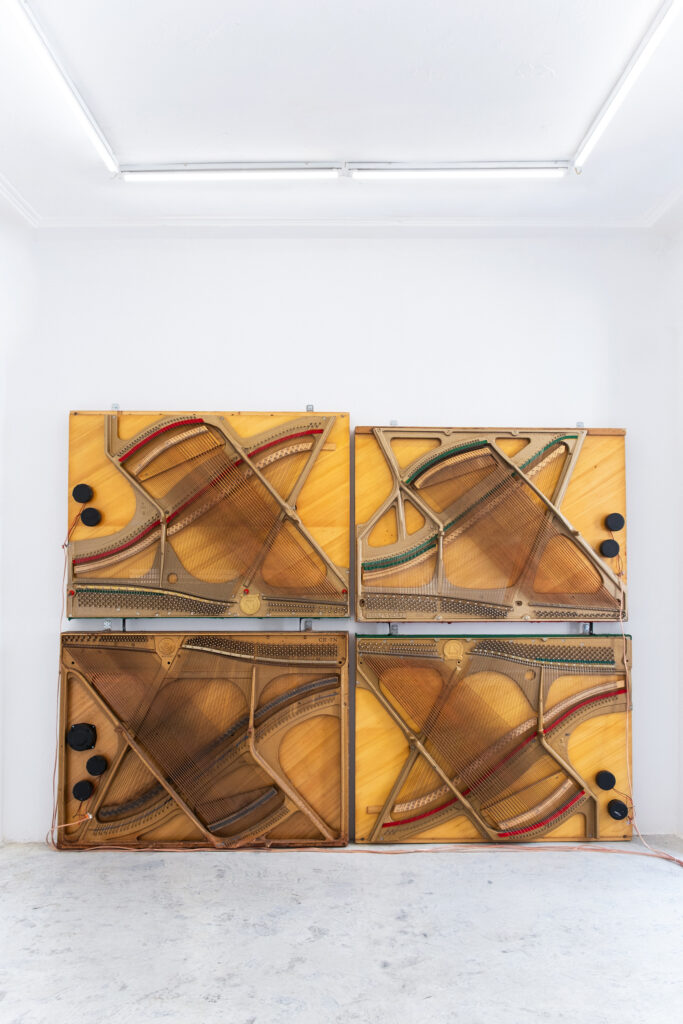
By Sympathy III operates within this logic of transmission. The installation takes the form of an open-heart operation. The pianos are dismantled, stripped to the bone, relieved of their mechanics until their most intimate structure is revealed. Of the instrument, only its essential organ remains: the soundboard. This act of exposure reveals what we might call the anarchitecture of the piano. Freed from the structure that once constrained it, the soundboard becomes an autonomous body, capable of receiving, transmitting, and transforming the vibrations that pass through it. Its acoustic skeleton emerges as the ghost of a vanished function; a persistent presence that continues to operate despite the absence of the instrument.
Arranged throughout the space, the soundboards enter into dialogue with one another through contagion. They generate a shifting vibrational field that extends beyond their own limits to affect the architecture of the site and the bodies inhabiting it. Sound thus ceases to be merely an audible phenomenon and becomes instead a propagating force, a tension circulating between materials, surfaces, and presences.
Memory
The piano is a symbolically charged object. Passed down from generation to generation, the recycled pianos of By Sympathy III accumulate stories as much as they do traces of use. They have borne witness to family histories, memories, and sometimes traumas, while preserving the silence and the secrets of all they have encountered. Each piano bears the marks of this prolonged existence. Time is inscribed in the wood, in the material’s deformations, in its cracks and tensions; these scars gradually alter its resonance.
The architectures of the pianos also tell their own story. Each soundboard preserves the traces of the forces that have shaped it: the constant tension of the strings, relocations, repairs, and successive transformations. Like a carefully maintained architectural structure, the metal reinforcements serve to support or compensate for the tensions accumulated over decades.
This material memory enters into dialogue with another form of memory: that of sound. Activated by transducers, the soundboards are traversed by compositions assembled from field recordings, sound archives, conversations, and personal collections. To these fragments are added the final notes played on each piano before it was dismantled. Captured on its deathbed, they resonate as a farewell, a final breath addressed to the instrument before its body is opened. Cut, assembled, and recomposed, these materials form acoustic landscapes in which different layers of memory overlap, intertwining intimate recollections, documentary traces, and sonic vestiges of a presence on the verge of disappearing.
Memory no longer appears as fixed content or as a simple act of preservation. It becomes a process of reactivation. Archives come to inhabit matter once again. Memories propagate through the wood. Vibrations carry fragments of narratives, turning each soundboard into a point of encounter between inherited memory and reconstructed memory.
Yet this memory does not function as an image. It never fully reveals itself to the eye. Instead, it manifests through vibrations, resonances, and effects that traverse both space and the bodies within it. That which was recorded, forgotten, or lost reappears in a tangible form, as a diffuse presence that once again comes into contact with the present. Like a ghost, memory does not return to be observed, but to be felt. It passes through matter, alters perception, and reactivates forms of presence whose origins sometimes remain elusive.
Spectral Presence and Perception
The acoustic skeletons of By Sympathy III are no longer entirely instruments. They become intermediary bodies, suspended between architecture and memory, between presence and disappearance. Traversed by invisible vibrations, they produce a space in which phenomena manifest themselves less through what they reveal than through the effects they generate.
In Ghost and Spirit, Mike Kelley examines the figures of the ghost and the poltergeist as forms of presence that continue to operate without ever fully appearing. Rather than an apparition, spectral presence here denotes the persistence of a force whose manifestations we can only perceive through its effects and whose vibrations we can only feel. By Sympathy III likewise engages with this logic. Sounds seem to emerge from matter itself. Vibrations ricochet across surfaces, pass through bodies, and quietly alter the perception of space. Like ghosts, they remain invisible; only their effects become perceptible.
The association between the piano and spectral presence is deeply embedded in our collective imagination. The piano is often the object through which a presence reveals itself: a single note resonates in an empty room, a melody arises without a performer. What unsettles us is not the sound itself, but the absence of an identifiable source. By Sympathy III reactivates this displacement. The viewer searches for a loudspeaker, an origin, a cause. Yet the sound appears to emanate directly from the material itself, as though the space had become resonant.