Giorgio Celin
19 March – 30 May 2026
MADRID
El Dorado
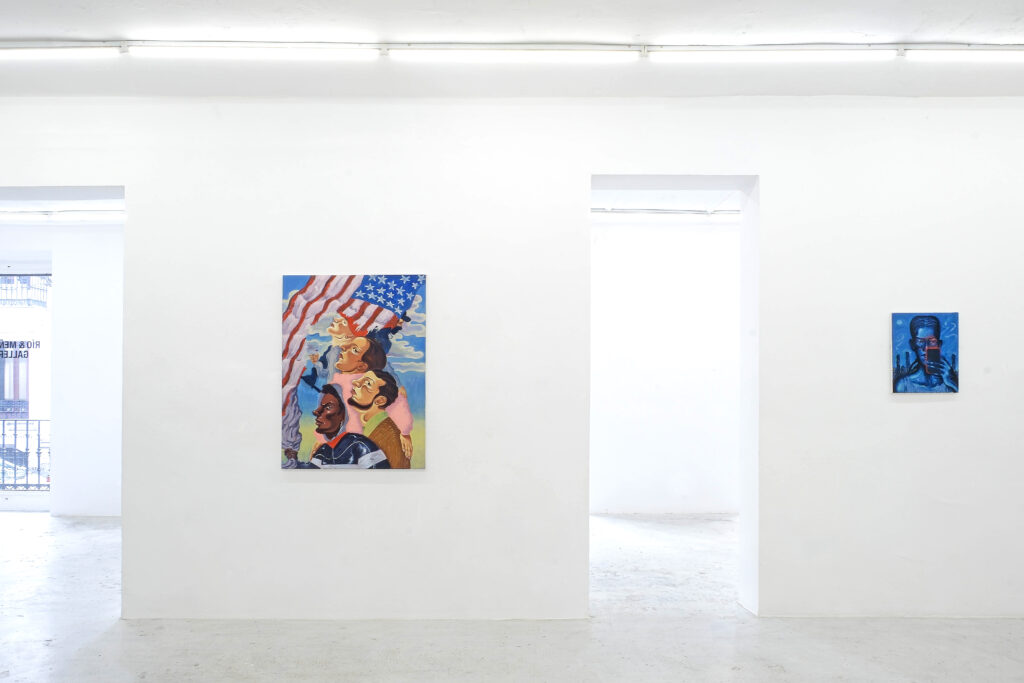
There are lives that unfold under the sign of a promise, not because it is ever fully realized, but because it compels us to keep moving forward. El Dorado belongs to that constellation of images and longings that, rather than pointing to a precise place, evokes the force of a promise: the necessary fiction that, somewhere, a less fragile life awaits us. It is this distance between the horizon and lived experience that Giorgio Celin portrays in his works: that interval in which, as Homi K. Bhabha wrote, home ceases to be a stable place and becomes something provisionally constructed through movement. From this standpoint, his body of work considers migration as a condition that reorganizes intimacy, affection, and the way bodies learn to live with loss, adaptation, and the desire to belong.
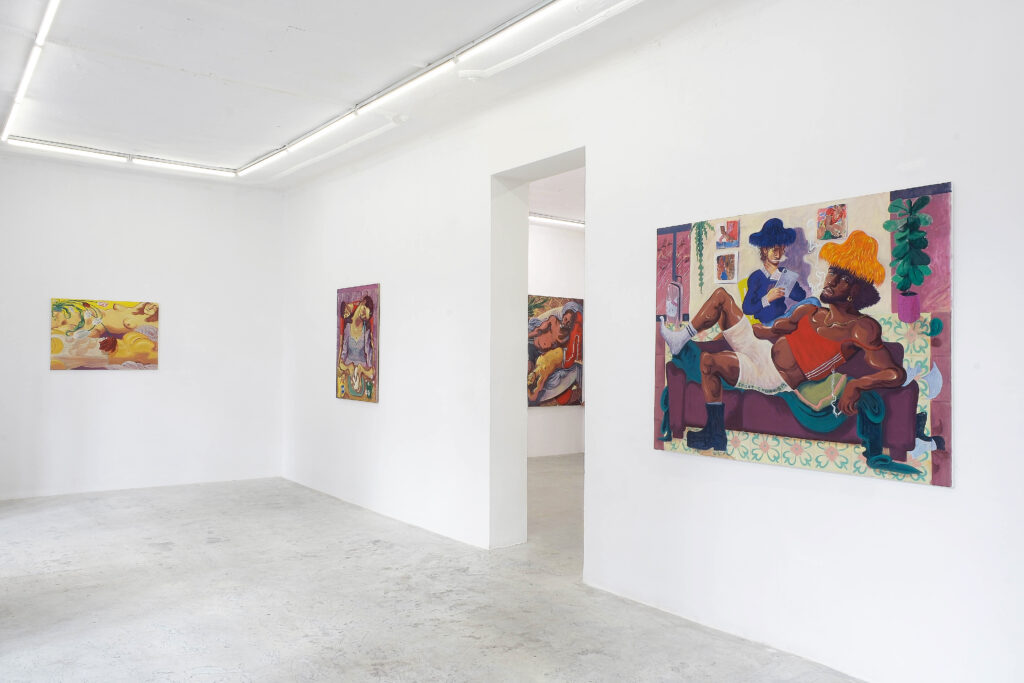
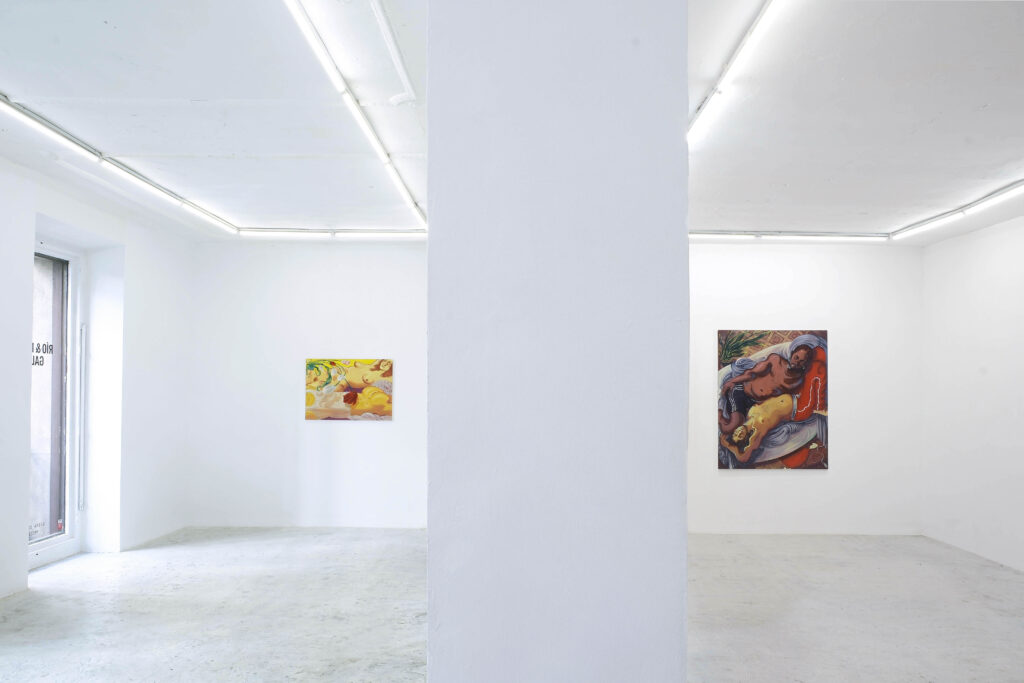
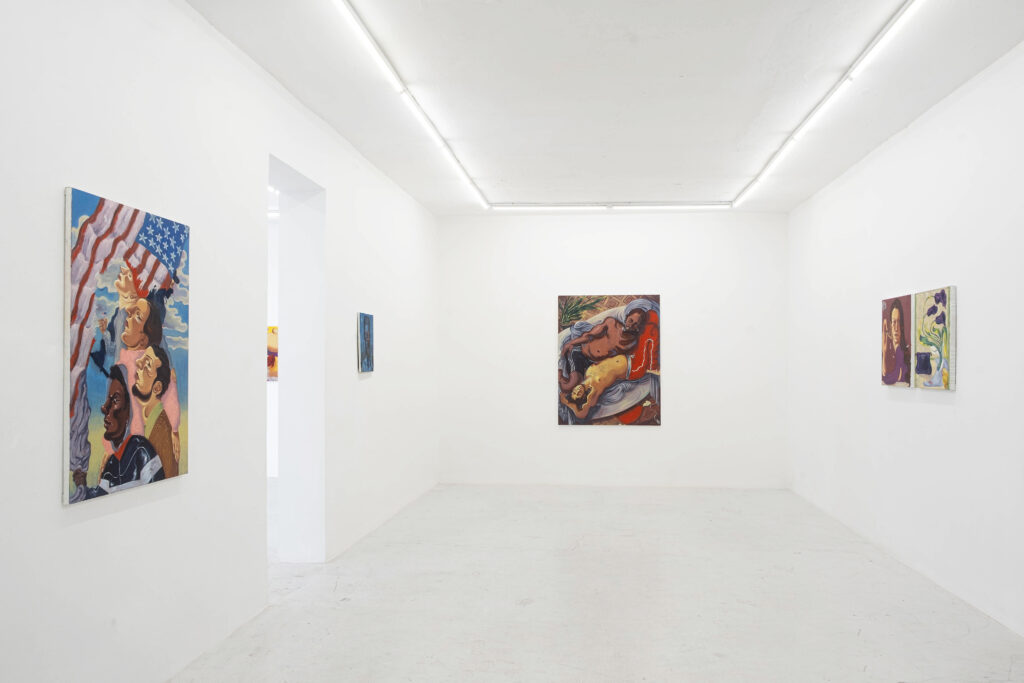
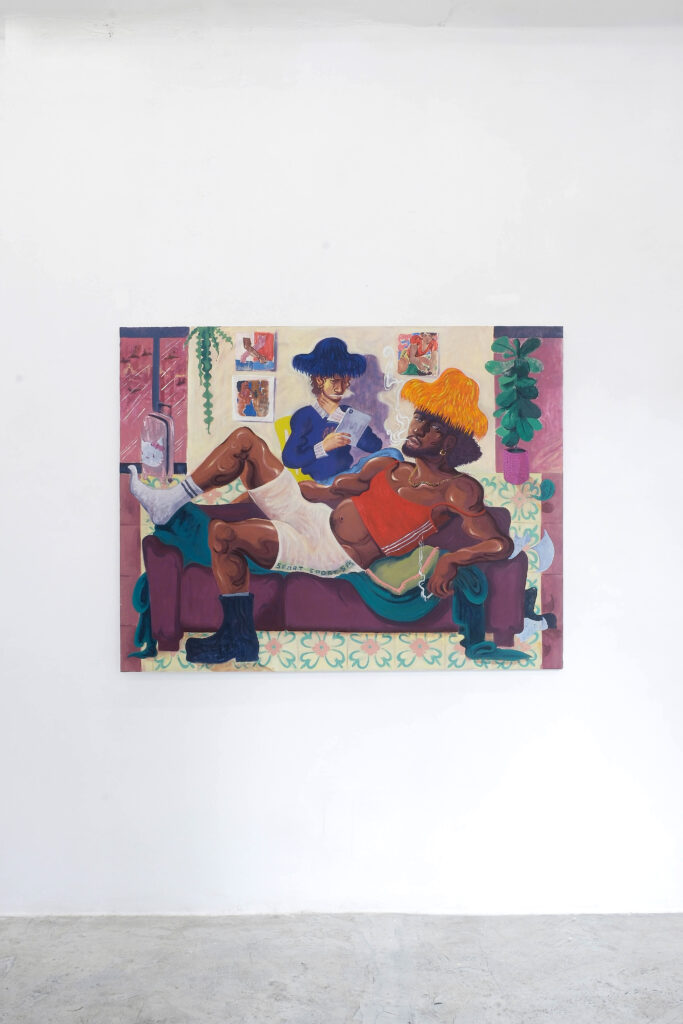
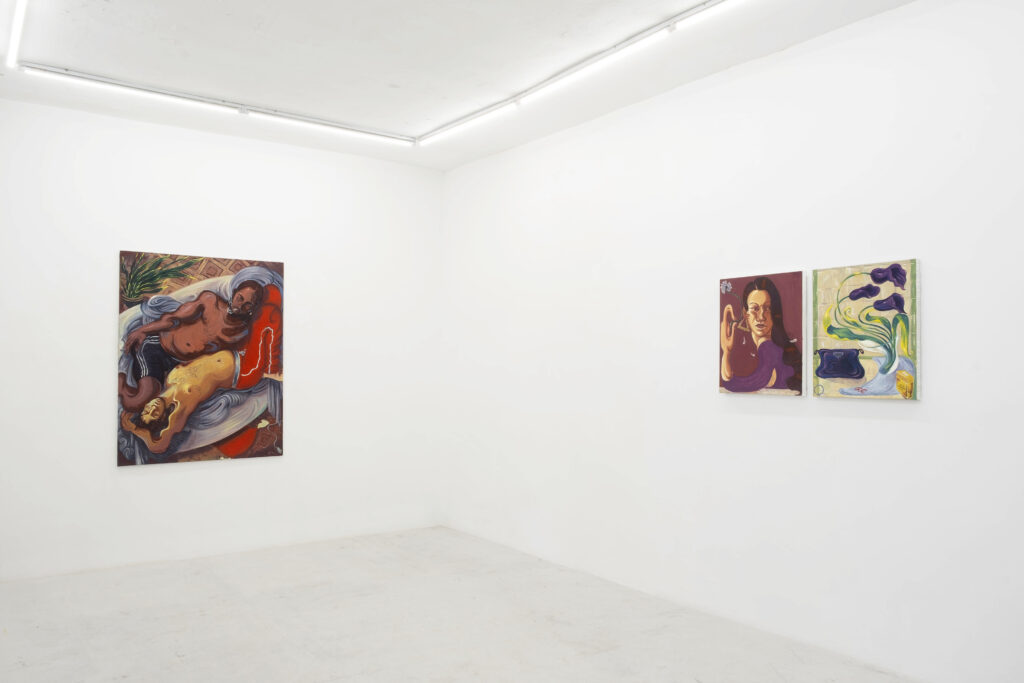
Yet in Giorgio’s painting, that promise never takes the form of an epic of displacement. Instead, it filters into the most discreet material of everyday life, where migration ceases to be a visible episode and becomes an atmosphere that silently shapes relationships, gestures, and the very experience of the private sphere. His scenes dwell on moments of apparent calm—an interior, a closeness, a shared pause—and yet, within that stillness, a muted tension persists, as if the bodies bore within them all their histories of origin and uprooting, those that continue to act even when they are no longer named. This is what happens in works such as Hedgehog’s Dilemma, Summer of ’96: The Dough, or Summer of ’96: The Ball Pit, where the artist suggests that intimacy and belonging are never pure states, but forms of coexistence shaped by memory, learning, and inequality.
Far removed from any explicit dramatization, Celin returns to that threshold where intimacy acquires historical density and where the desire for rootedness almost always coexists, quietly, with uncertainty. It is precisely this restrained quality that constitutes one of the greatest virtues of his painting, for it does not push the scene toward visible conflict or emotional exaltation. Rather, it works through the image’s ability to sustain tension without resolving it, allowing everything to unfold in the distance between bodies, in the economy of a gesture, or in the silent breathing of a shared space. There is, in all of this, a particularly subtle understanding that the migrant experience transforms not only the external conditions of existence, but also its affective rhythms, the perception of time, and the relationship to closeness, care, and desire. His works therefore do not merely reflect personal scenes; they turn intimacy into a territory marked by loss, longing, and the challenge of cohabiting in common, a space where even silence seems to carry a narrative.
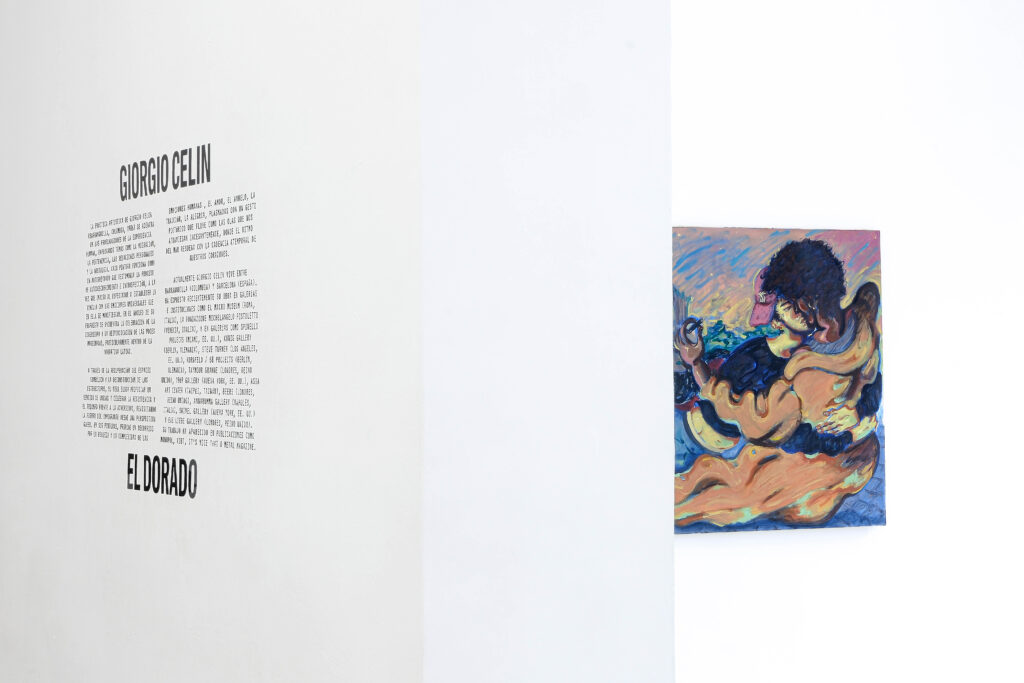
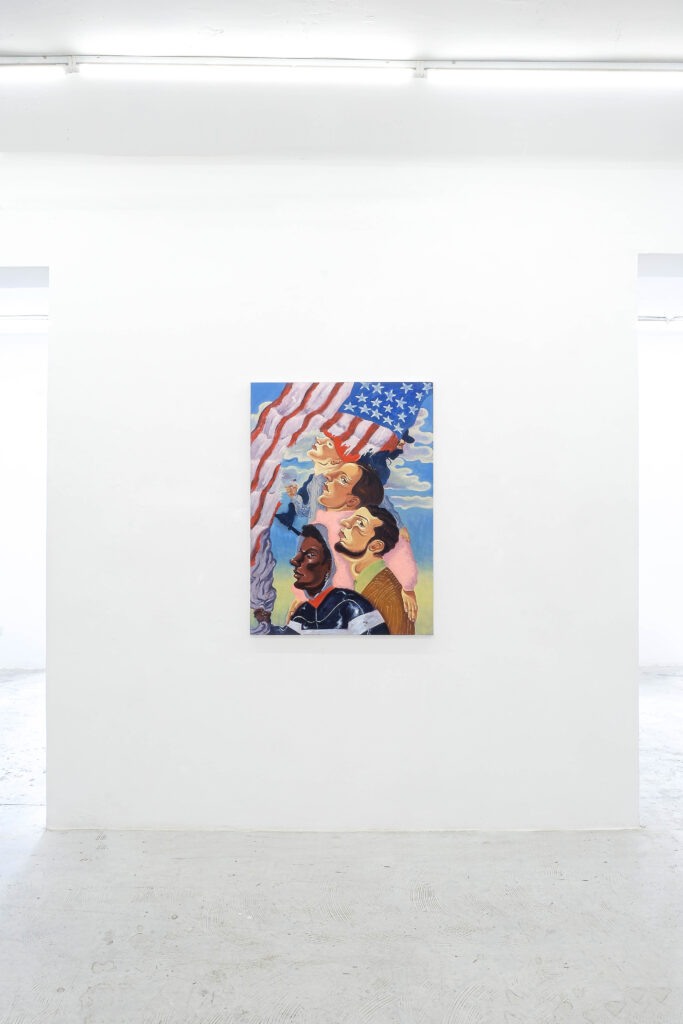
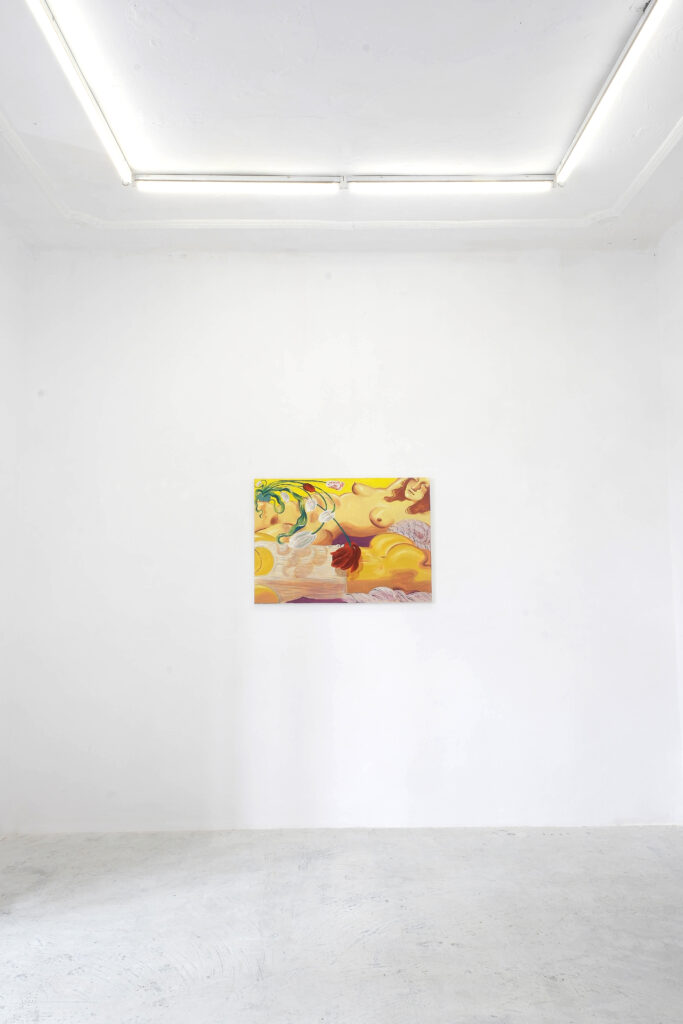
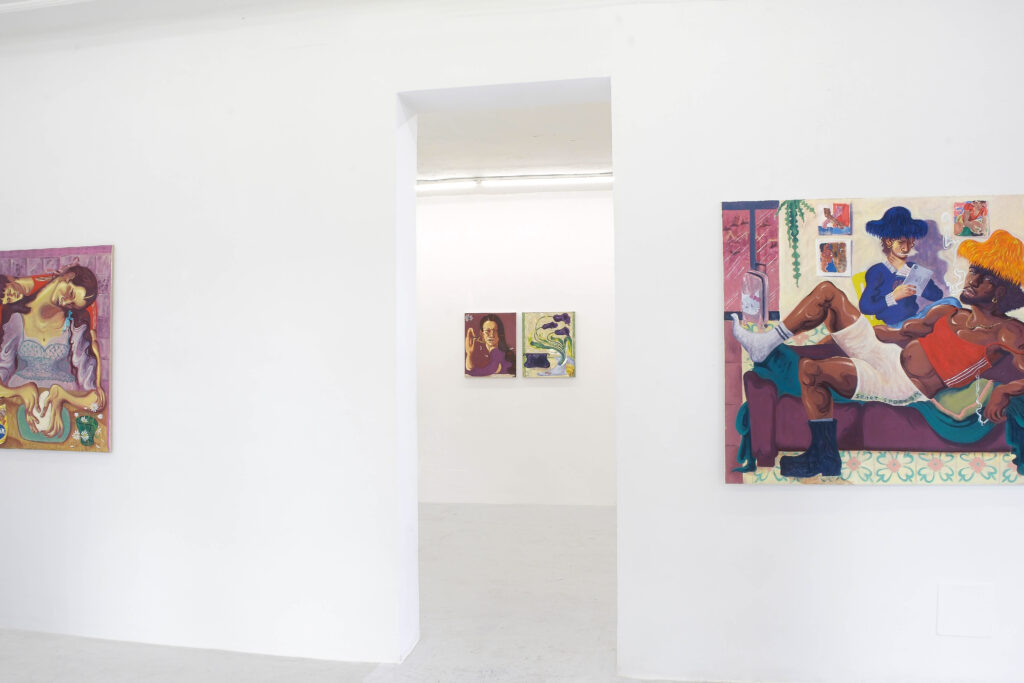
That density arises not only from the subjects Giorgio addresses, but also from the way the painting itself directs and holds our attention. His technique relies on a synthetic figuration, carefully shaped, in which light, composition, and the relationship between figure and space operate with quiet persistence. Nothing in his paintings seems to seek emphasis; on the contrary, the pictorial surface advances through a kind of deliberate restraint, allowing emotion to settle gradually into each scene, each patch of skin, the posture of every body, the interior atmospheres, or the discreet presence of objects. This formal measure—which sharpens the scene without making the image rigid—enables him to construct a painting of great proximity, one that trusts in the duration of looking and in the viewer’s ability to perceive what is not immediately declared. That restraint is decisive because, in his work, technique never appears as something separate from the affective world it brings into play. Although he looks upon his figures with tenderness, Giorgio also knows how to respect the shadowed zone each one preserves, as if he understands that every life shaped by the experience of migration holds something that can never be fully expressed.
Perhaps that is why El Dorado does not appear here as the triumphant image of arrival, but as something more complex and more truthful: the persistence of a desire that survives even where the promise of belonging becomes fragile, partial, or deferred. Giorgio Celin does not seek to resolve that distance, but to inhabit it; to remain in that place where love, the body, memory, and migration intertwine without ever being fully reconciled. Much of the strength of his work lies in that mark, in its capacity to make visible that all intimacy is traversed by the world and that, even in the closest of spaces—where a life seems simply to unfold—the great questions remain active: who gets to belong, under what conditions, and at what cost.