Marlon de Azambuja
16 october - 14 december 2025
Prologue Rahul Gudipudi
The Other Side
Prologue by Rahul Gudipudi
“Night is never silent. It hums, roars, breathes, and, in the end, folds the world into itself.”
Marlon de Azambuja’s oeuvre, while often a commentary on architectural modernities, is more so an exercise in subjective archaeology—unearthing the personal and collective lore buried within shared natural and built environments. The exhibition “The Other Side” continues Azambuja’s long-term rapture, and the study of the material and immaterial forms that envelop us. The night is not an absence but a marked presence in his practice—a living, tactile space where perception shifts and memory awakens to witness our surroundings through a renewed register. As the Sun’s rational rays fade and the shadows of our inner lives grow long, they give form to the phantoms that daylight denies.
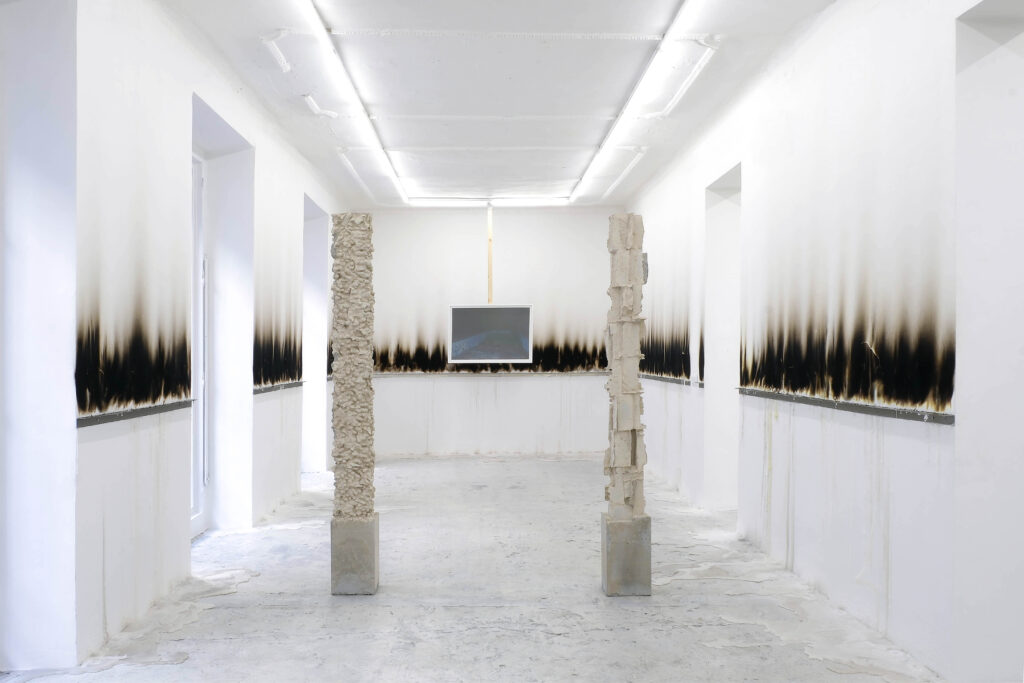
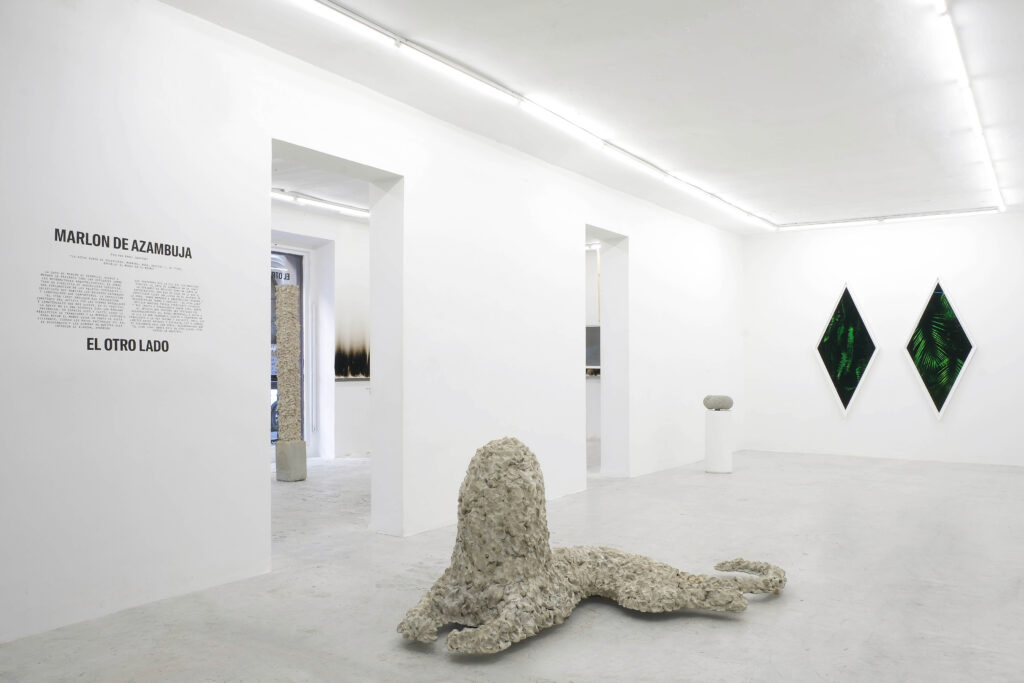
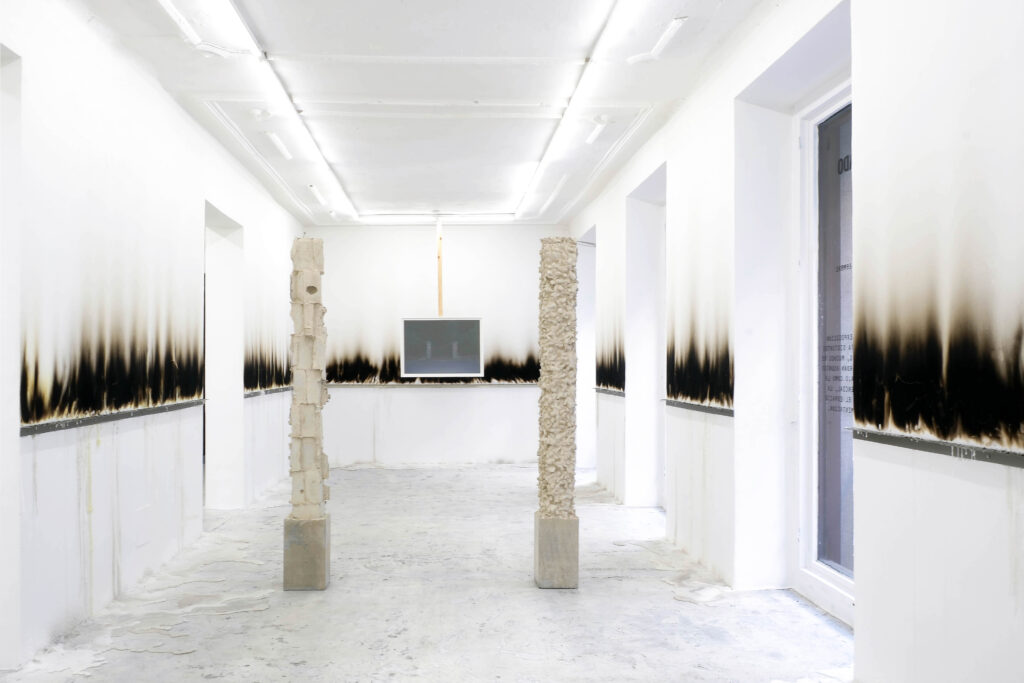
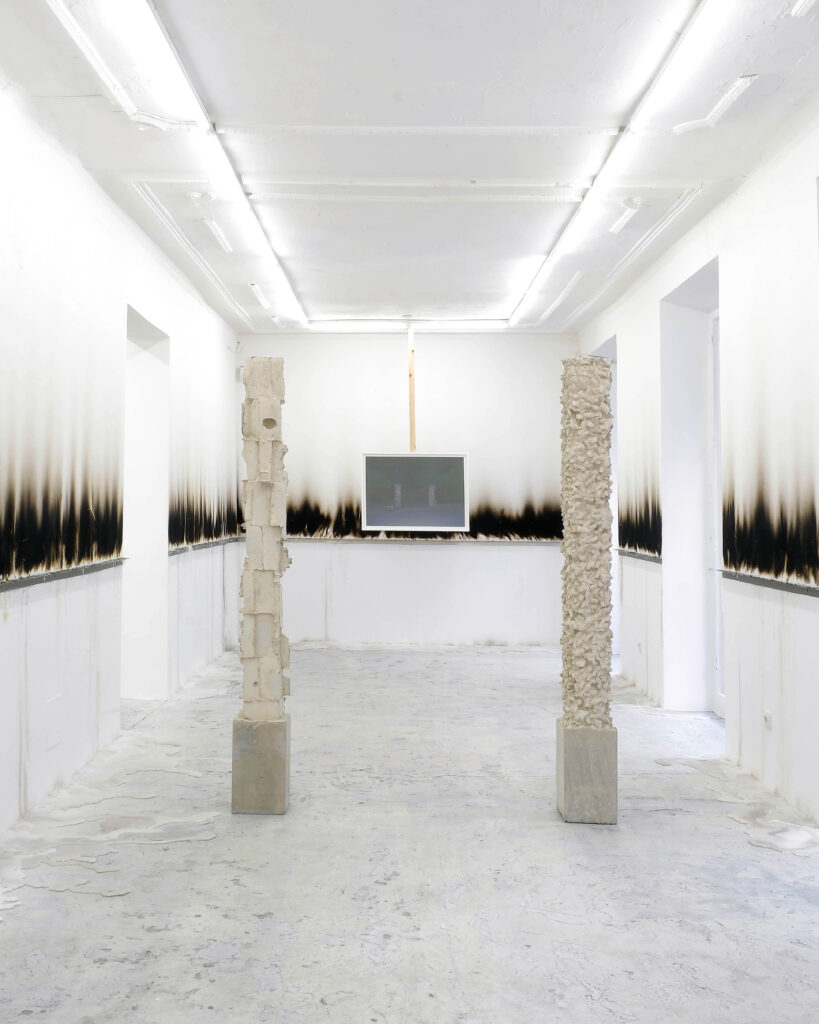
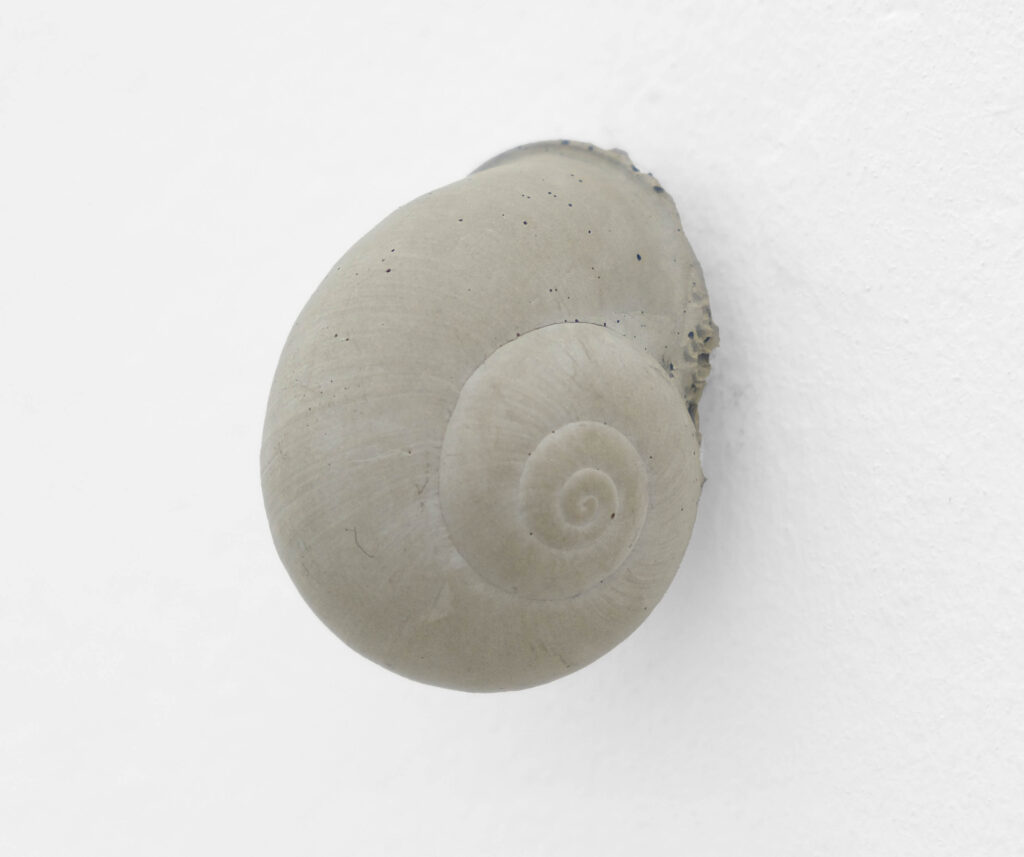
“Esfinge/Pantera”, a sphinxed panther, guards the exhibition as it seemingly transmutes in form, drawing, among other references, from a glass-eyed sculpture made by the artist’s father when he was a child. Azambuja recollects the impeccable version having disappeared into the night when momentarily left unattended in preparation for transit. This tribute, many years later, holds a similar charge and potency for what might come. Panthers surface across cultures as mythic guardians that guide and watch over travelers as they journey between spirit and worldly realms. Half riddle, half guardian, Azambuja’s creature stares through the visitor—into the past, the future, and beyond. Through it, the viewer becomes aware that observation is never neutral; it is a shaping force, a negotiation between the work and the subject, where meaning is continually regenerated. Thresholds are recurrent themes in Azambuja’s work, reflected in the exhibition in the dual pairs of “Beherit", or totemic sculptures that appear to act as gateways engaging interior landscapes of psyche and rituals of passage. Azambuja’s process in creating these works—also employed in others like “Historia Interminable” (Neverending History) and “Mundo” (World)—is alchemical, turning a humble inorganic material like concrete into an intricate petrified mineral. These works suspend time and act as portals that transport us. A warty pumpkin and an out-of-sight snail become meditations on the present, fossils of the human and natural condition, questioning what we choose to acknowledge and what we allow to decay.
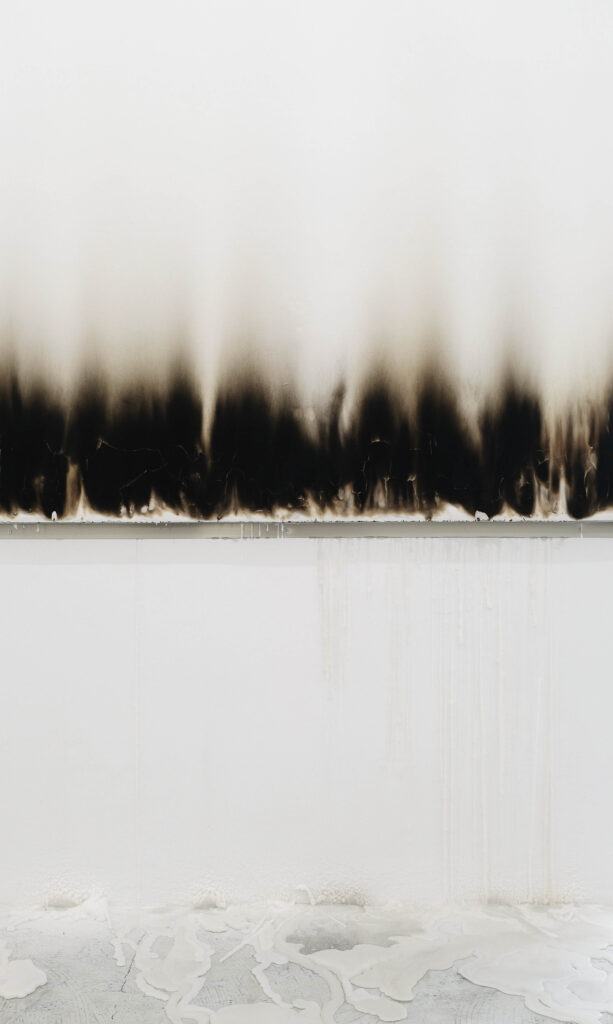
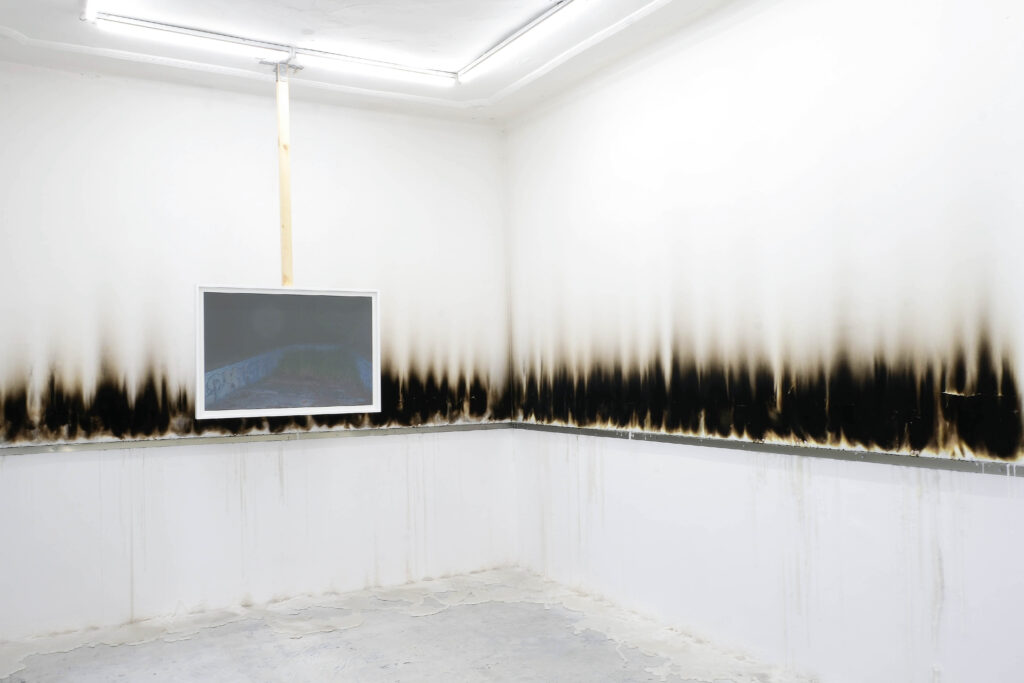
In “Broken Burned Kilometer”, Azambuja sets ablaze a row of candles to construct a landscape of rupture that expands the exhibition’s spatial bounds as it burns the surface of the walls. The puddled wax and charred remnants form an encompassing horizon and field that splits and inverts space, marking what one may construe as a ritual action by the artist—an act that cannot be witnessed by viewers outside the confines of their own imagination. They traverse this nonlinear, scorched terrain, navigating personal dichotomies of loss, grief, hope, and endurance. Each fragment in the work suggests histories both intimate and collective, yet the work refuses a singular narrative. It is a meditation on transformation—on how destruction can become a canvas for renewal.
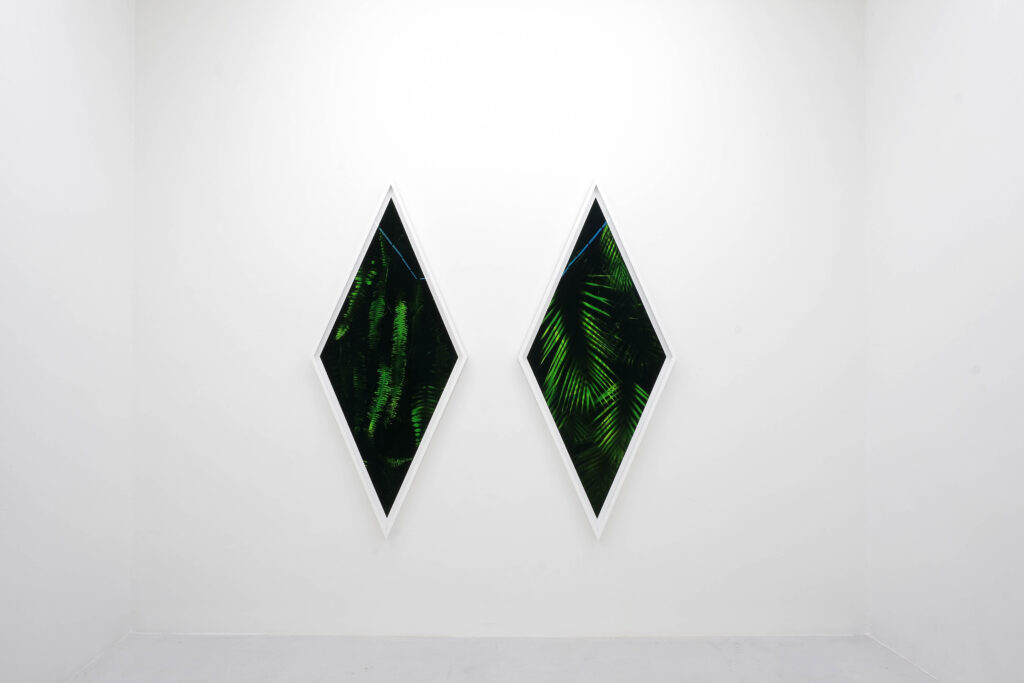
The night, as a leitmotif in Azambuja’s works, is best exemplified in “Nocturna” and “Bohemian Lights”. Presented here as a pair of rhombus-shaped works, Nocturna comprises a series of dark and iridescent forestscapes, where shadows overlap and fold upon one another, creating spaces that are at once hostile and sanctuaries. The artist captures numerous layers of foliage through pigment to produce an uncanny window that tears into these critical natural habitats and reveals our relationship with them. Similarly, the photographic prints titled “Bohemian Lights” faintly glow illuminating the relationship between nature and humans. Here, nature encroaches in the dark upon ruins of modernity and coloniality, casting a memorial for what once was. Wilderness acts as an agent rather than a backdrop—a sentient terrain bearing the scars of our shared histories. Darkness in these works is not merely a void but also a medium—dense, layered, captivating. Time and memory become crucial, and Azambuja provokes us to inhabit multiple temporal registers in simultaneity: pasts remembered, presents apprehended, futures anticipated. In this folding of time, memory becomes active, and perception becomes dynamic.
Azambuja’s art is less a set of objects than a field of experiences—a network of echoes where the viewer becomes implicated in the work’s unfolding, where memory and imagination co-create and resignify form and meaning. “The Other Side” mirrors our subjective realm and invites us into another, where the artist requires us to witness as our material world unravels—to bring the subdued to the fore, crafting a domain at once intimate and infinite. Here, the thresholds between matter and spirit, light and shadow, collapse into one another—reminding us that the other side is never elsewhere, but within.