Margaux Compte-Mergier
DECEMBER 18, 2024 - JANUARY 31, 2025
MADRID
Before the After
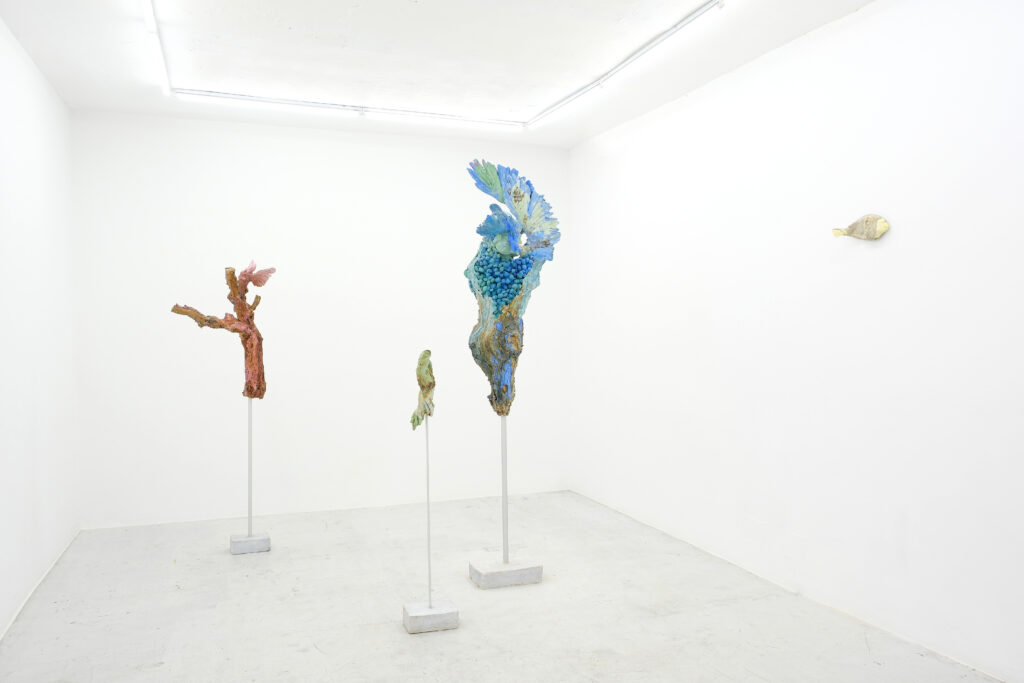
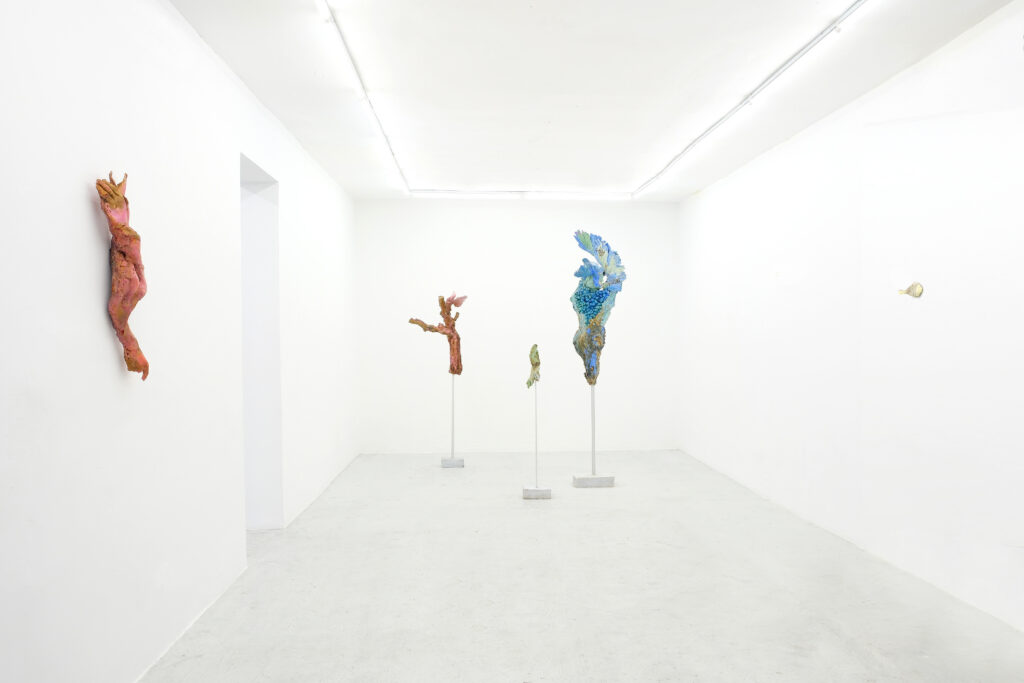
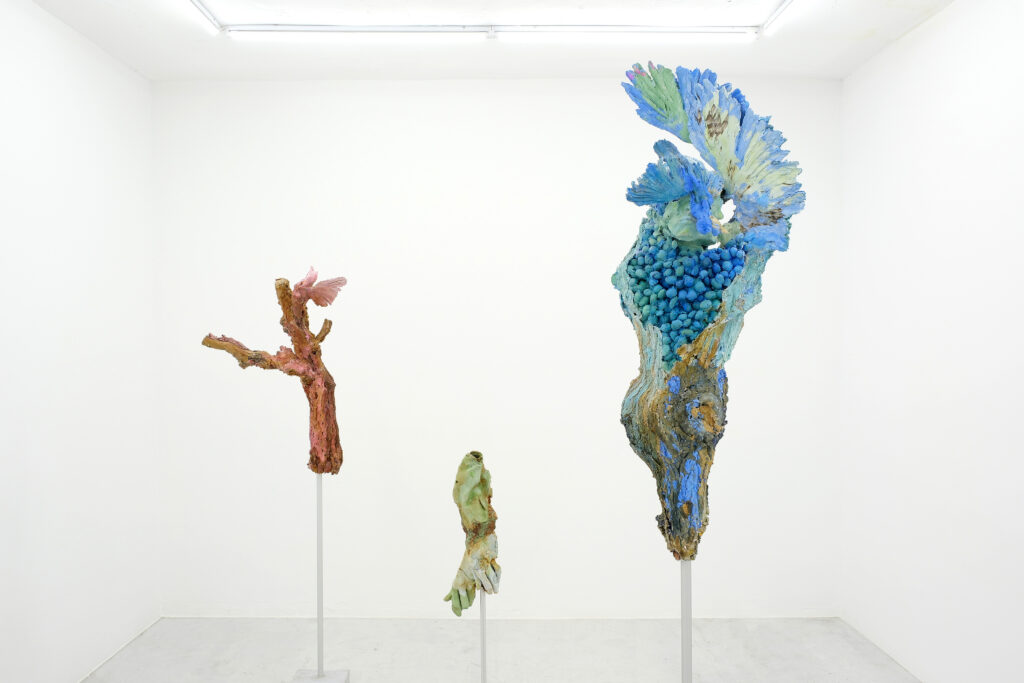
A bestiary is a medieval manuscript that compiles stories and moral lessons about animals—both real and imaginary—portrayed as religious or ethical symbols. These texts go beyond mere zoological knowledge; through their descriptions, they reveal how humans perceive and interpret their beliefs. The exhibition *“Antes el después”* by French artist Margaux Compte-Mergier (Paris, 1994) presents a series of sculptures that engage with animalistic elements. These works evoke the fragility of beasts, the risk of their extinction, the implications of transhumanism, and challenge the evolutionary notion of "the living," exploring the tenuous boundary between nature and culture.
"The after," a concept emphasized by the use of the definite article, refers to a time of "what has already transpired." The title positions the exhibition in a transitional moment, an intermediate state—a liminal interval preceding the manifestation of the "after." Between a prior and a subsequent time, these temporal states mirror each other, leaving the exhibition’s present moment suspended in flux. Through this suspension, Compte-Mergier interrogates the era we inhabit: a time where our vision of the future emerges as an unresolved, anxiety-laden question—a torrent, a heterogeneous matter in perpetual transformation, composed of images of catastrophe, disaster, climate crises, wars, and apocalyptic forebodings. It is this looming anxiety about the future that forms the nucleus of the artist’s exploration.
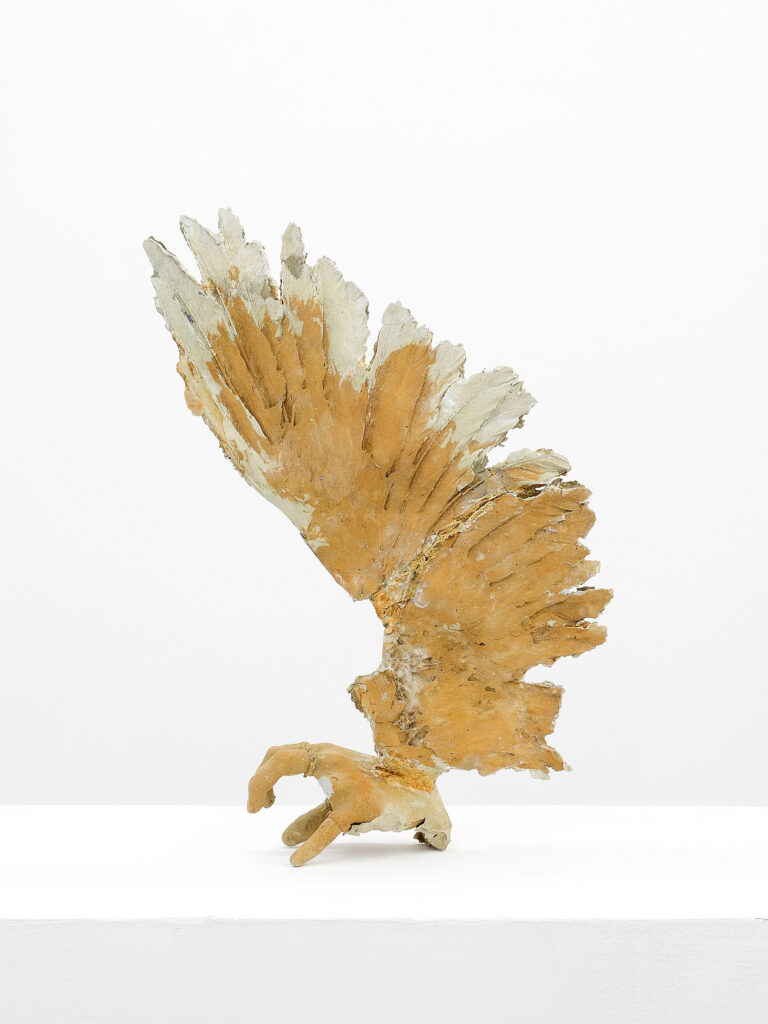
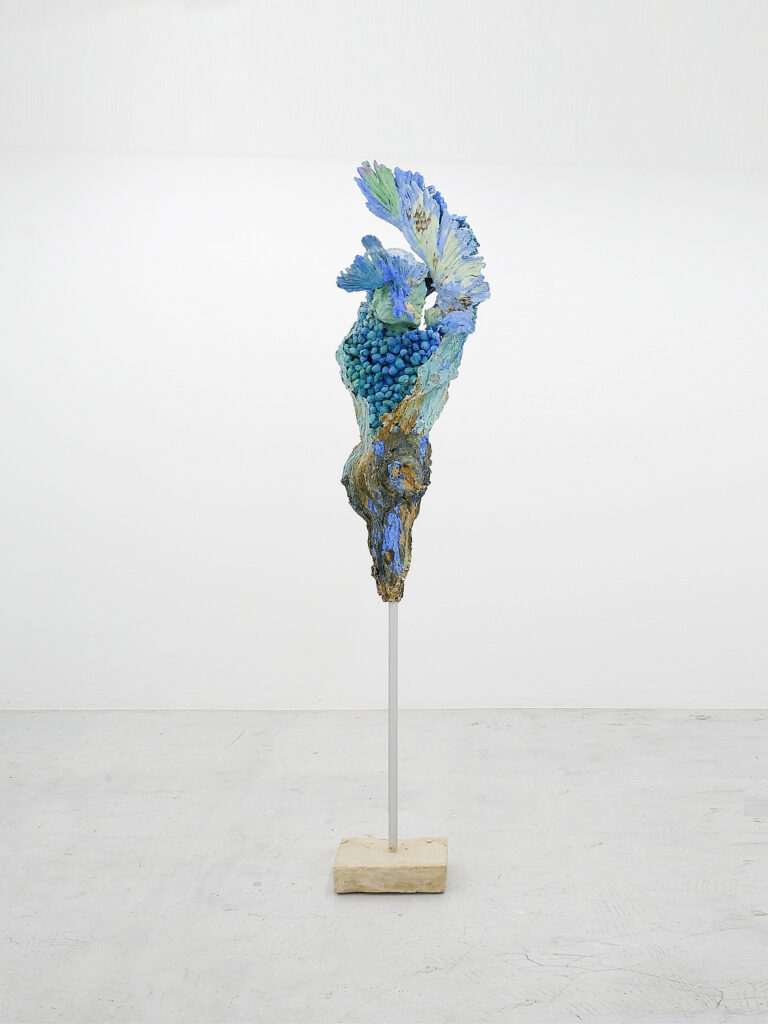
The sculptures in the exhibition are situated "before the after," frozen in their becoming. They are captured in a transitional state, a moment of uncertainty where forms intermingle and intertwine. Animals, human bodies, plants, and objects morph, their direction unknown. Hybrid creatures from a suspended time... they are beautiful, unsettling, whimsical, and nightmarish. These marvelous monsters evoke science fiction, religious imagery, mythological representations, Ovidian metamorphoses, and, on a broader scale, interrogate the concept of the sacred.
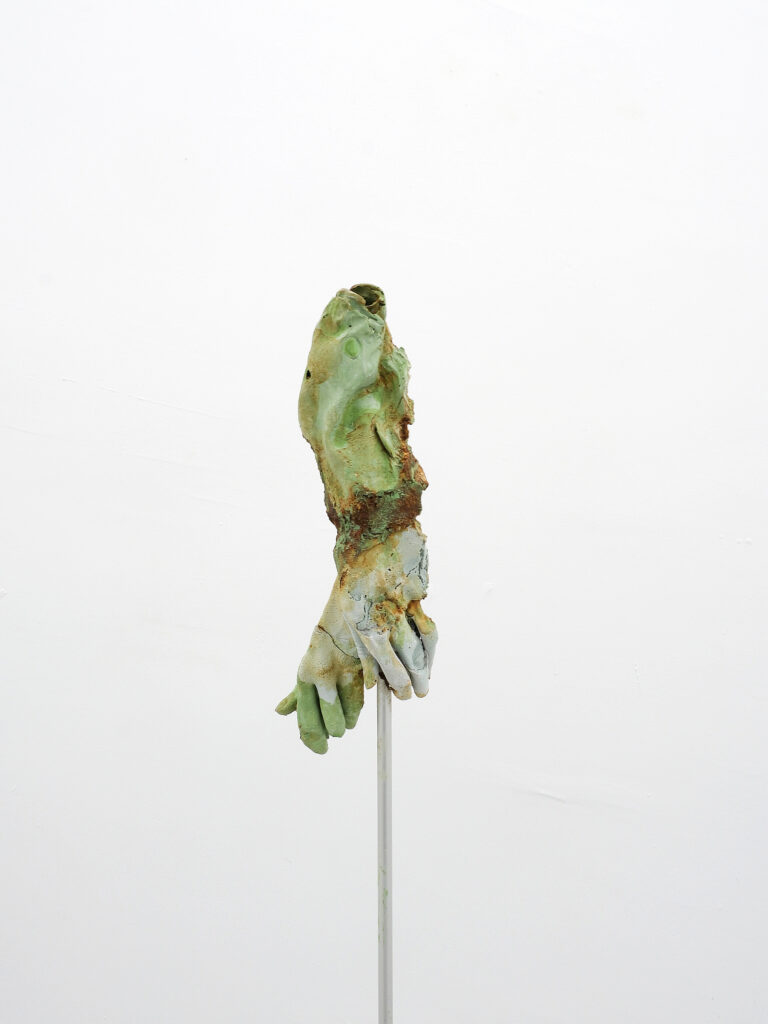
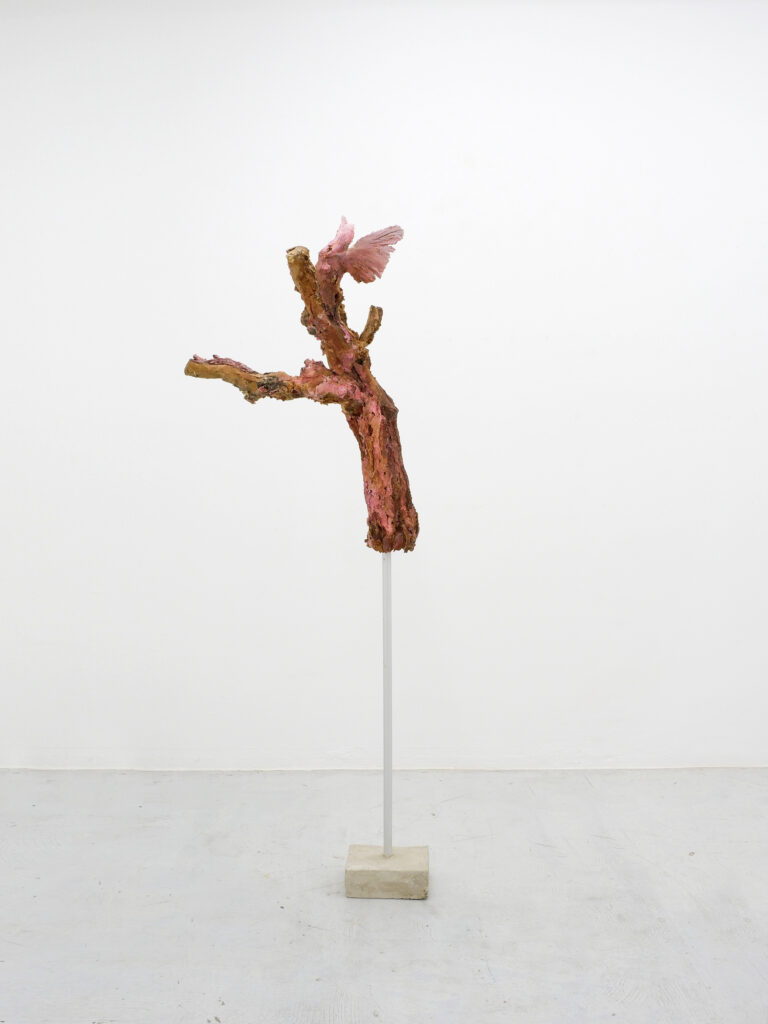
The creative gesture positions itself in the "before," leaning toward what is yet to come. When the artist begins her process, she is unaware of the final destination of her pieces. Her works bear the traces of their present moment, forever frozen (feathers, fragments of paper, branches... trapped within the material). The material itself is in constant flux. Compte-Mergier works with natural resin and metallic powders that continue to evolve over time (copper takes on a blue patina, iron rusts and shifts in hue, bronze acquires a greenish tinge). These sculptures invite two distinct ways of seeing: the contemplative gaze, which encompasses the entirety of the landscape and grasps its overall form; and the detailed gaze, which dissects the unity and demands an attentive examination of each component.