Alan Sastre
24 october 30 november 2020
MADRID
Perder el Mapa
Alan Sastre's voice arises from knowledge and intuition, from searching and getting lost. [...] A journey where the map has been lost and whose engine of movement is fueled by the wonder of discovery.
Text: Constantino Molina
Alan Sastre introduced me to the concept of Tyrian purple, or royal purple. During that same evening, he also mentioned something about a green whose toxicity spread through the salons of European bourgeoisie in the early 19th century. It was a vibrant green, Scheele's green, whose composition based on copper arsenite caused the inhabitants of those homes to mysteriously fall ill. As for Tyrian purple, it is obtained from the Murex Brandaris mollusk, and it takes 10,000 specimens of this snail to obtain 1g of dye. Its price is quite a celebration. That's how painting is: a mystery, a poison, a celebration.
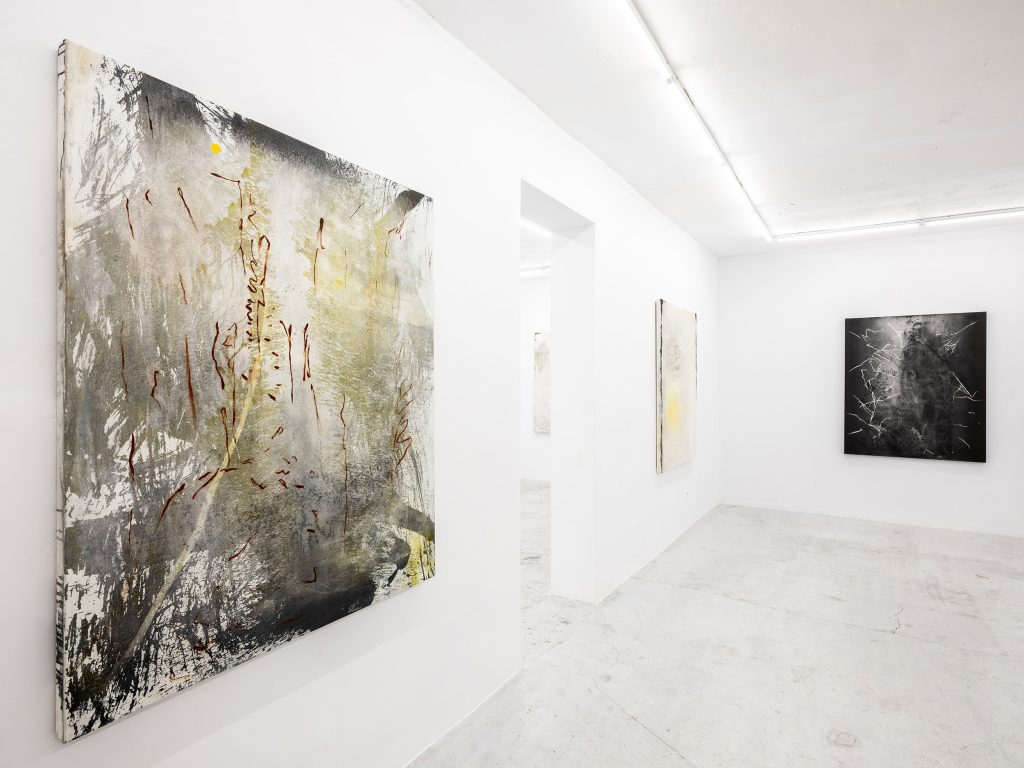
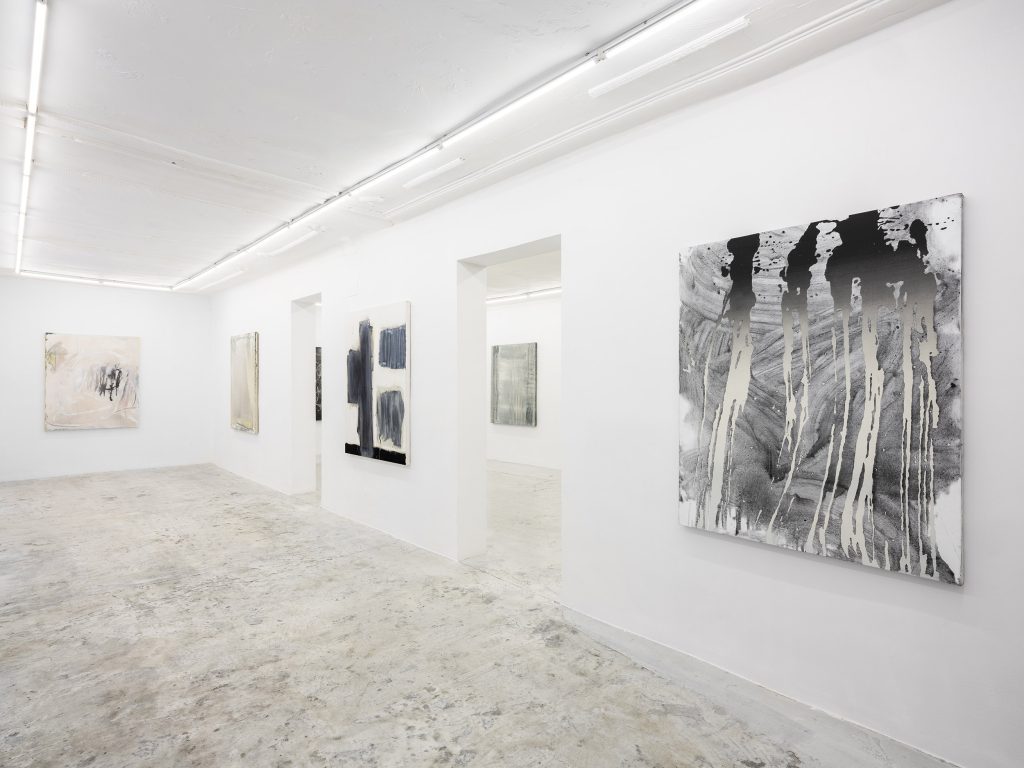
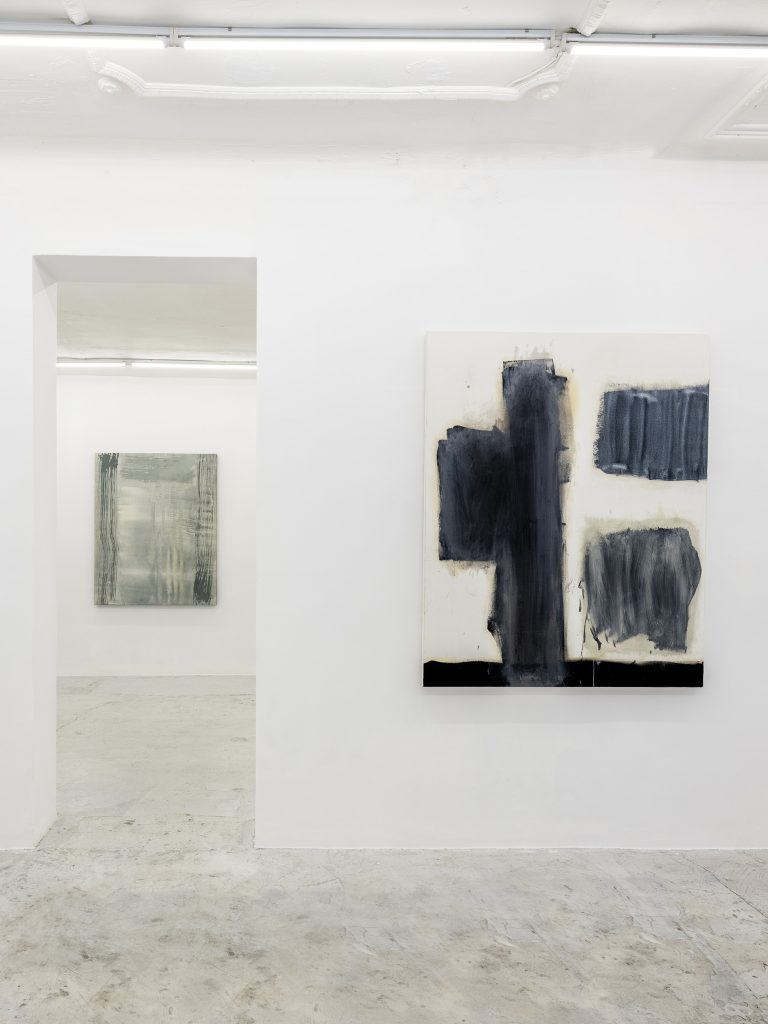
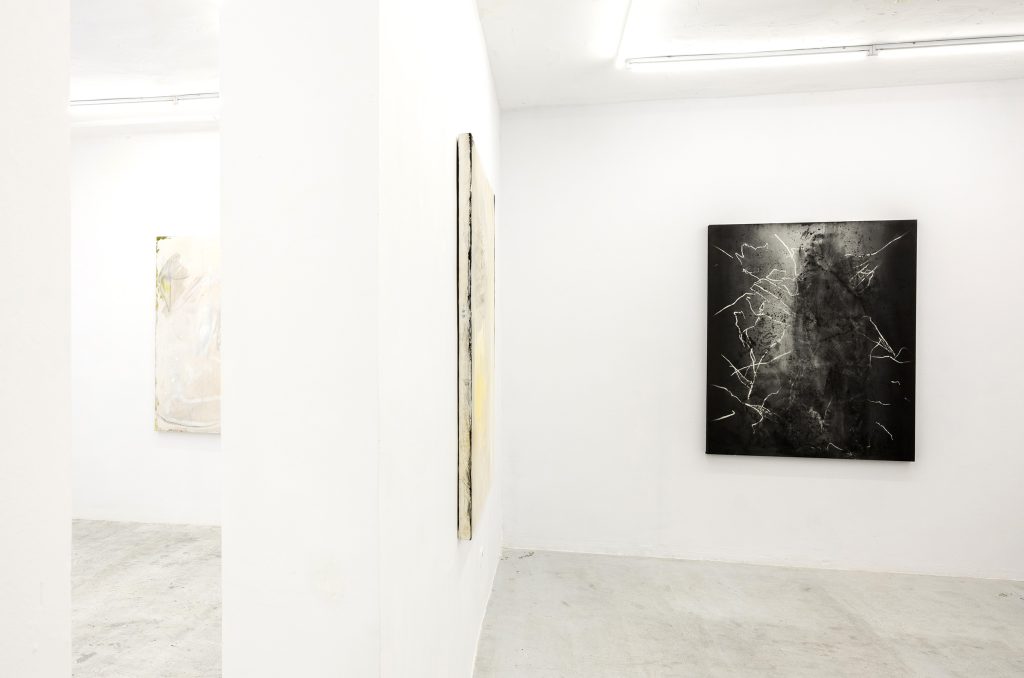
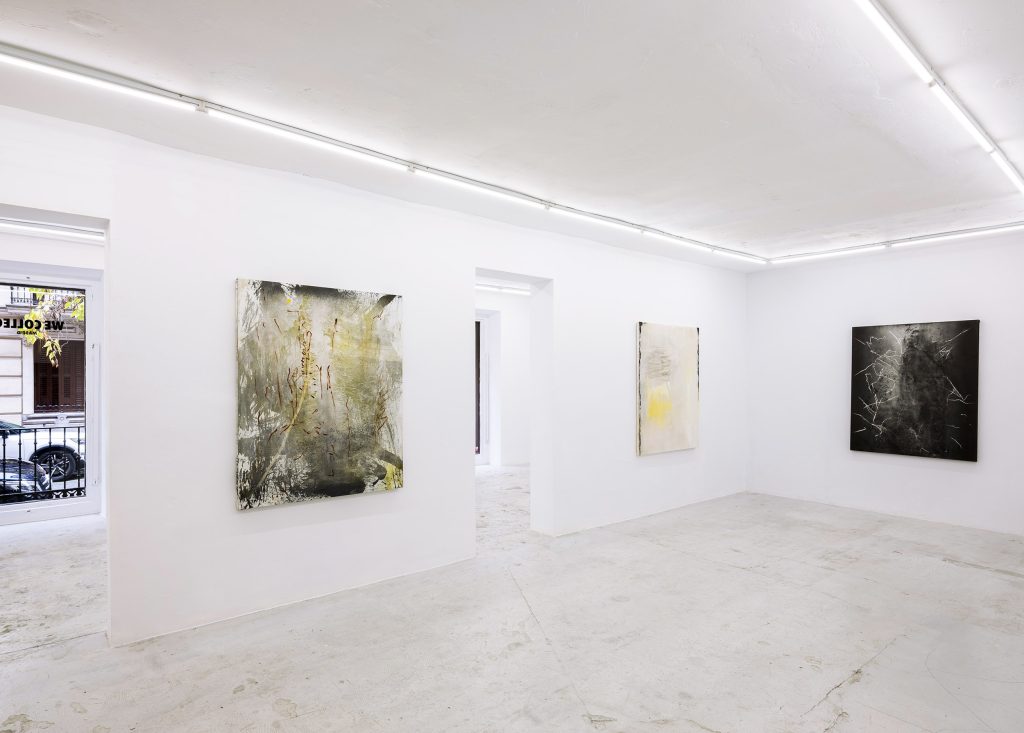
Alan Sastre's work dwells in the riskiest realm of painting: abstract painting. It's the biggest sieve of plastic junk, a place where any novice with little foundation and even less interest can easily hoodwink both the gallery owner and the collector if the piece in question can pleasantly match the tone of the sofa and the curtains. And it's fine that it should be that way, that artworks find their niche in coexistence with the everyday, with the home, and with life. But an important fact must be considered beforehand. And that fact is the soul of the piece. Its spirit. Its reason or lack thereof for existence. That which turns it into something more than a mere decorative object, that which endows it with a presence of its own, capable of surprising us in the same way in any space that hosts it. And this space could very well be a gallery, a museum, a forest, a living room, or a landfill. When a work acquires spirit, its presence is certain and alive. Independent. True.
There is something in Alan Sastre's work that dazzles. And that something is the perfect link between chemistry and soul, between pigment and emotion. Because there is chemistry when someone navigates with ease —like a lark in Shelley's verses or a dagger in Torta's voice— in the curious semantic field that contains acrylic dispersions, polyvinyl acetates, alkyd resins, wetting agent, or Tyrian purple. And there is soul when there is a gesture. In the case of his work, that gesture is a stain that crosses the canvases, becoming matter beyond the air, an omnipresent witness to the presence of a body. It is the body of the artist himself, a stroke whose movement hints at a living force. It is the voice of the gesture, a voice that names us, for it is well known that it changes, that the gesture is different with the different circumstances of life, that one does not hold the coffee cup in the same way if touched by love or enveloped in sorrow, that one does not walk the streets in the same way when an emotion touches it with its magic or if monotony constricts our spirit.
In the case of Alan Sastre, that voice comes from knowledge and intuition, from searching and wandering. Ultimately, it comes from everything that leads us and participates in the feeling of adventure. A journey where the map has been lost and whose engine of movement is fueled by the wonder of discovery. I learned this a couple of months ago during his visit to Madrid in early September. We were crossing Plaza Mayor when he mentioned a canvas he had started a few days before his trip. There was that stroke, in London, over 1200 km away, resting in the solitude of the studio while its creator showed me a photo on his phone. He said he didn't know where it would lead him, maybe nowhere, that it might end up being one of those unfinished works. That one begins with an intention and the painting itself then takes him down a very different path. That's what Alan Sastre was thinking in the middle of that vast quadrangular plane loaded with history. And that was the way, the one that leaps over the arcaded space of Plaza Mayor, the one that generates soul and adventure, the one that gives spirit to the object. The path of creation. The path of painting. A living force. A poison. Good poison. Give me poison because I want to die.